Overview
Waste Wise is an emotionally responsive smart-bin concept designed to make food waste feel visible at the moment it happens. Using simple sensing (weight + presence) and immediate feedback (audio prompts + a visual meter), the experience turns disposal into a quick “pause and notice” interaction—encouraging more mindful behaviour without lecturing or slowing users down. Built through iterative prototyping and testing, the final concept demonstrates how small, well-timed interactions can shift habits and make sustainability feel more human, intuitive, and memorable.
Problem
This project tackled a very human (and very common) sustainability problem: university students waste a lot of still-edible food —not because they don’t care, but because day-to-day life gets messy. Research and interviews pointed to the same pattern: impulse/bulk buying, busy schedules pushing people toward takeaway, poor fridge organisation that leads to “out of sight, out of mind,” and expiry-label uncertainty that makes people throw food away “just in case.”
The bigger issue is that many existing “food waste” solutions sit outside the moment the decision is made—apps and campaigns often provide information, but don’t meaningfully influence behaviour at disposal time, when habits are automatic and time is limited. That moment is where AI-driven systems can help most: combining sensing + context-aware feedback to reduce uncertainty and nudge better choices in real time—then learning patterns over time (what’s being wasted, when, and why) to support smarter planning and prevention, not just awareness.
Solution
Waste Wise was designed as an emotionally-responsive smart bin that creates a quick moment of
reflection right at the point of disposal. The system uses weight sensing as the primary input
and pairs it with a simple severity meter plus adaptive voice prompts that shift in tone—from
light encouragement to more direct feedback—based on how much food waste is being thrown away. This keeps the
interaction effortless (no “extra steps”), while showing how future AI-enabled systems can turn real-time sensing
into more personalised nudges that build awareness and behaviour change over time.
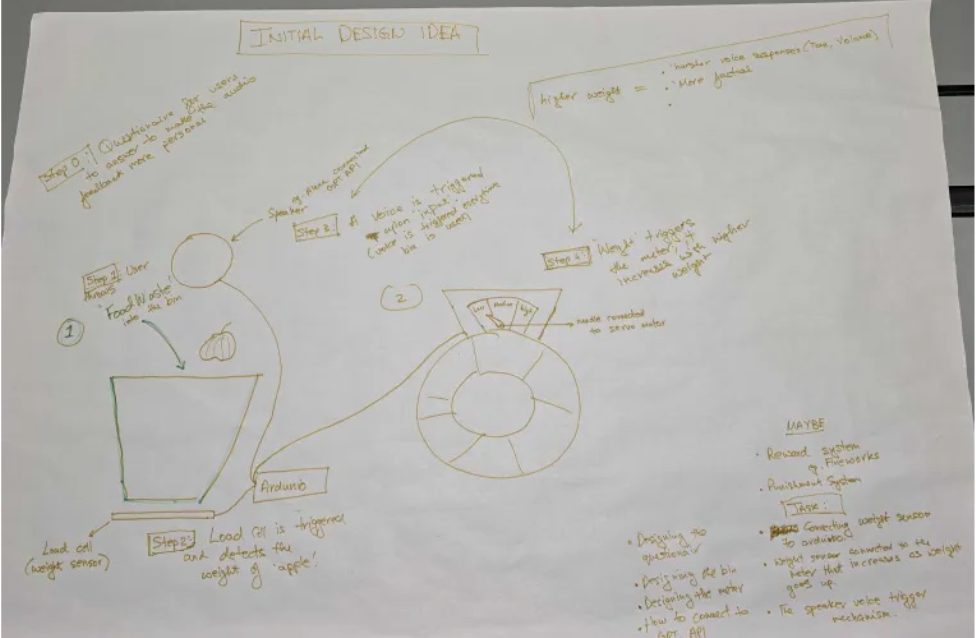
Real-time sensing → instant feedback
The core loop is intentionally simple: detect food waste (weight) → respond immediately (meter + voice) →
trigger a quick “pause and notice” moment. Iterations focused on making feedback feel fast, clear, and
non-judgmental—so the system stays engaging instead of annoying.
UX Research & Design
Waste Wise was designed around one hard reality: food-waste decisions happen in seconds.
Our research therefore focused on what actually influences behaviour at the exact moment of disposal—then
translated those insights into a zero-effort interaction (no buttons, no app dependency, no extra steps).
Research methods used
-
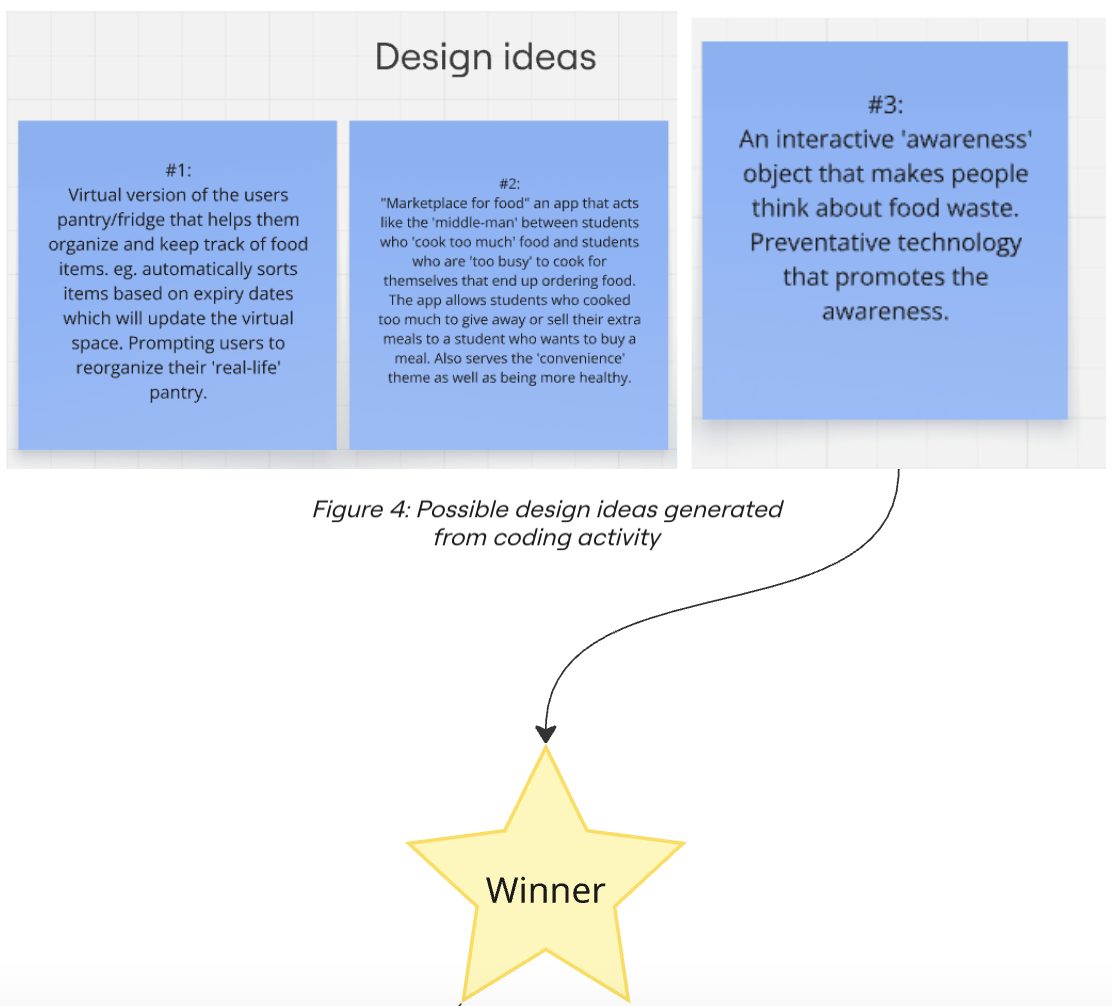
Desk research + problem framing: established key drivers of student food waste (routine disruption,
overbuying, convenience/tiredness, and uncertainty around labels) to anchor the design brief.
-
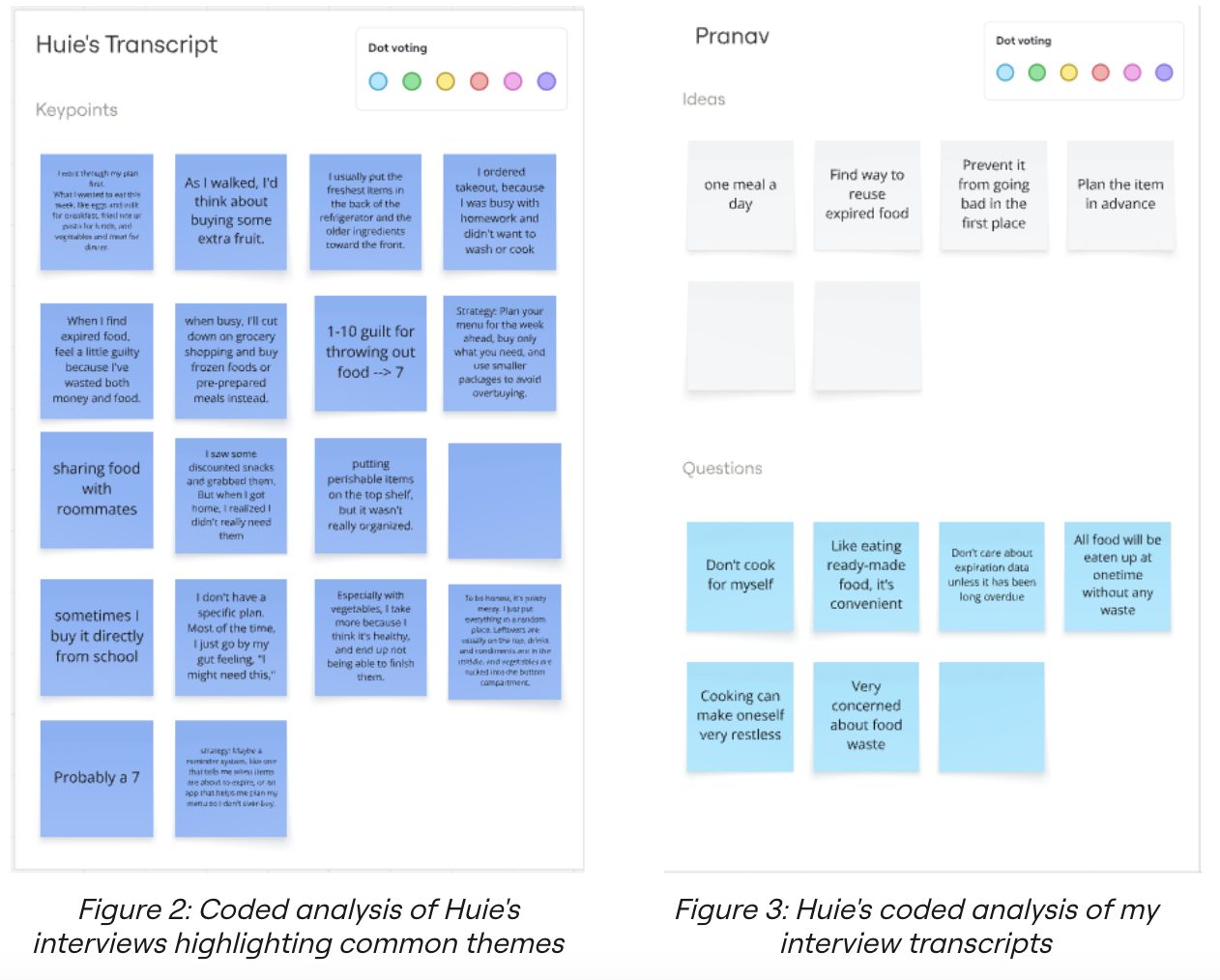
Semi-structured interviews + ethical consent: gathered first-hand student behaviours and motivations,
then synthesised findings through transcript coding and affinity mapping.
-
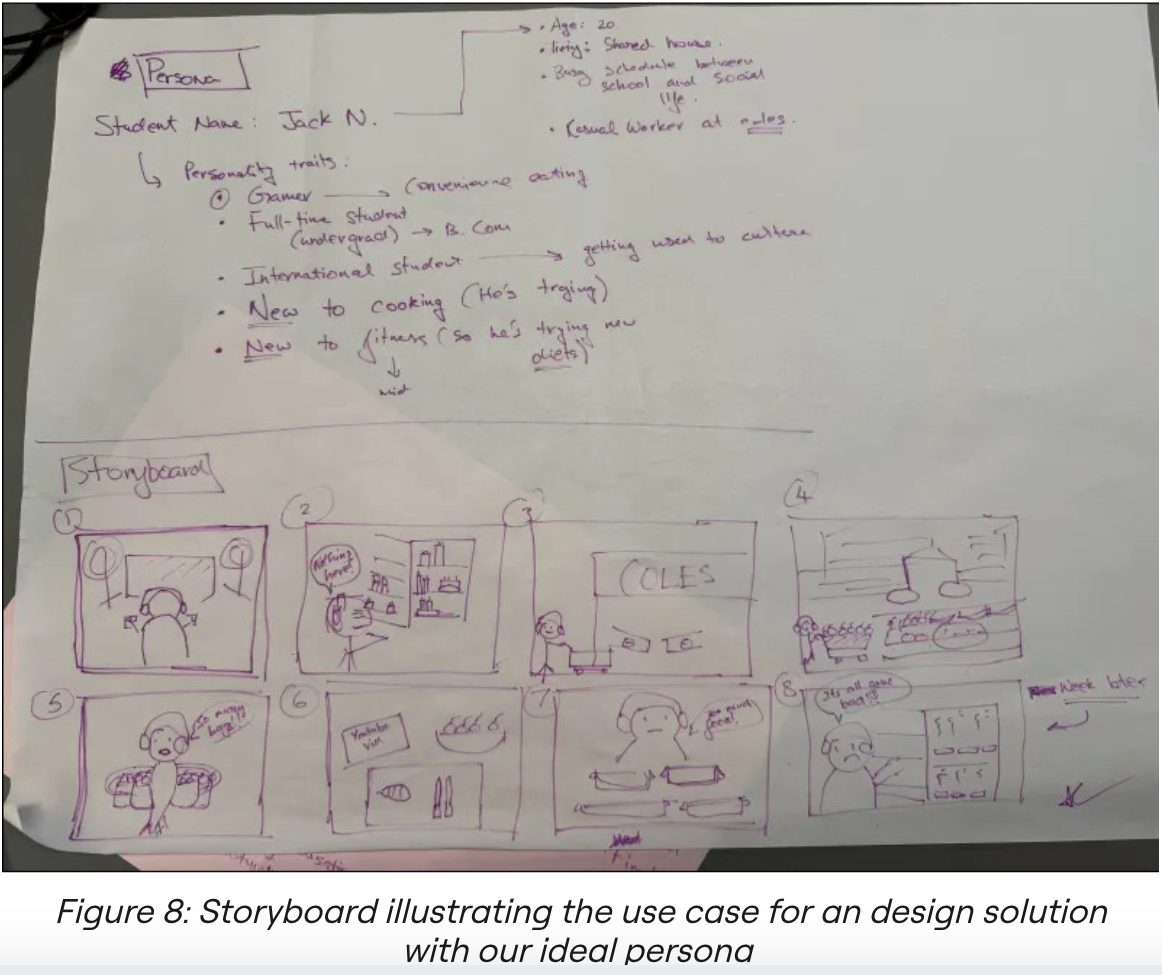
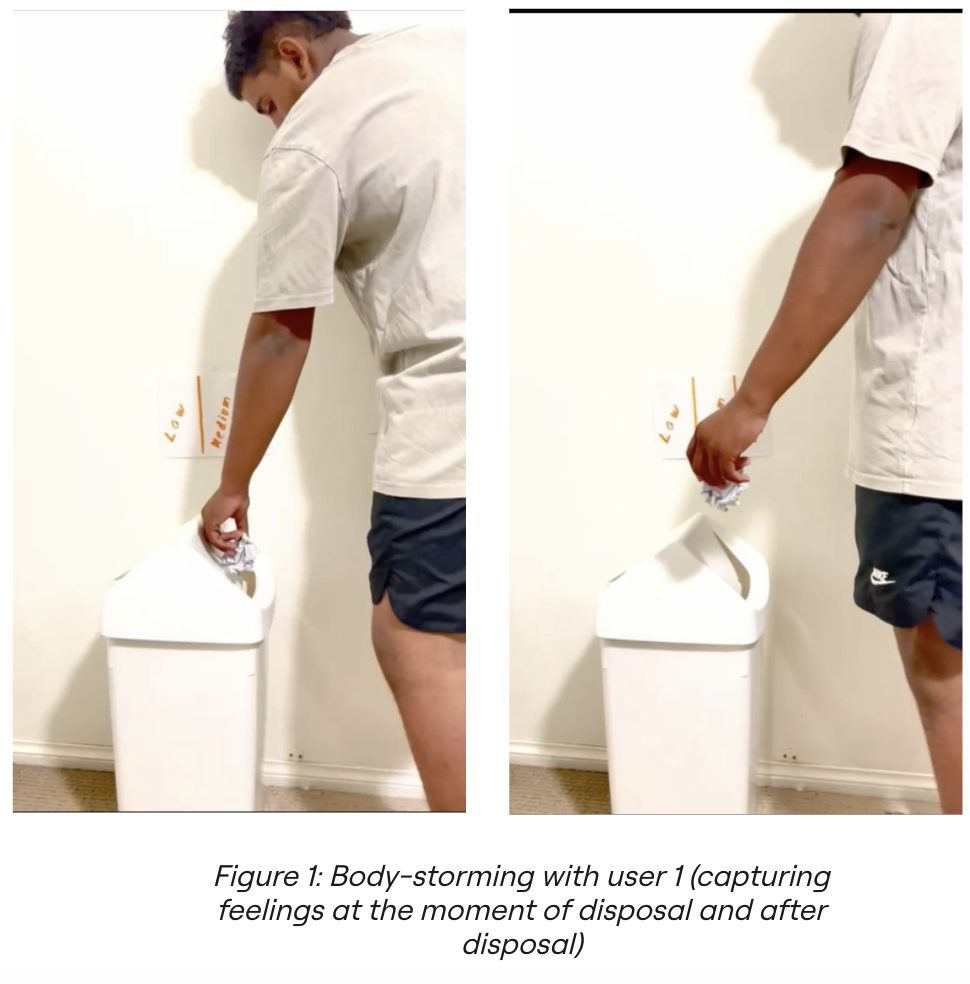
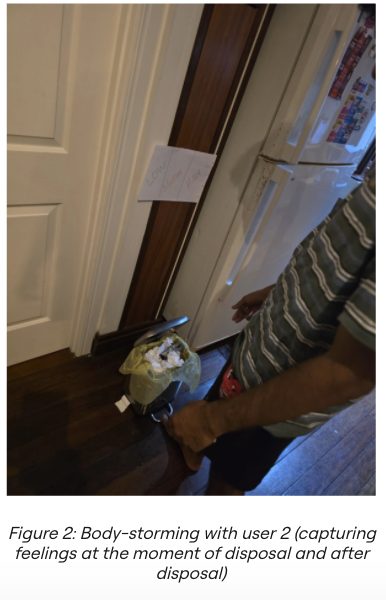
Bodystorming: mapped the “micro-moments” of disposal (approach, lid open, scrape, toss) to inform
sensor placement and intervention timing.
-
Wizard-of-Oz prototyping: simulated feedback quickly so we could test “tone” and timing before full integration.
-
Think-aloud usability testing: short, focused sessions with target users to capture live interpretation,
hesitation points, and emotional response (what felt helpful vs. annoying).
Design decisions proven through iteration
The project moved from “concept” to a believable behavioural system by testing what users noticed first,
what they ignored, and what made them reflect rather than resist. Key decisions were not guessed—they were
refined through multiple prototype versions and quick validation loops.
-
Prototype 1 (low-fi interaction validation): proved the core loop worked (automatic sensing → feedback → awareness)
and let us rapidly test tone/timing with simulated prompts and a physical meter.
-
Interaction insight: audio consistently grabbed attention first, while the meter worked best as reinforcement.
This shifted the design to prioritize “fast audio clarity” and use visuals as secondary confirmation.
-
Timing + tone iteration: we tuned the feedback so it lands after the action is detected but
not so late it feels irrelevant, and we treated tone as a UX control (firm-but-not-judgmental).
-
“Portable awareness” requirement: user feedback introduced a new design direction—making the meter detachable/remote
so awareness can happen before cooking decisions, not only after waste occurs.
-
Prototype 2 (credibility + emotional weight): the system evolved toward weight-based sensing to increase realism,
improve perceived credibility, and better connect “amount wasted” to “amount felt.”
Development
Development focused on turning the interaction model into a working, testable physical system—
reliable sensing, readable feedback, and smooth mechanical behaviour that supports the emotional intent of the design.
The aim was to build enough fidelity to validate the experience in real use, then iterate based on what users noticed
(and what they ignored).
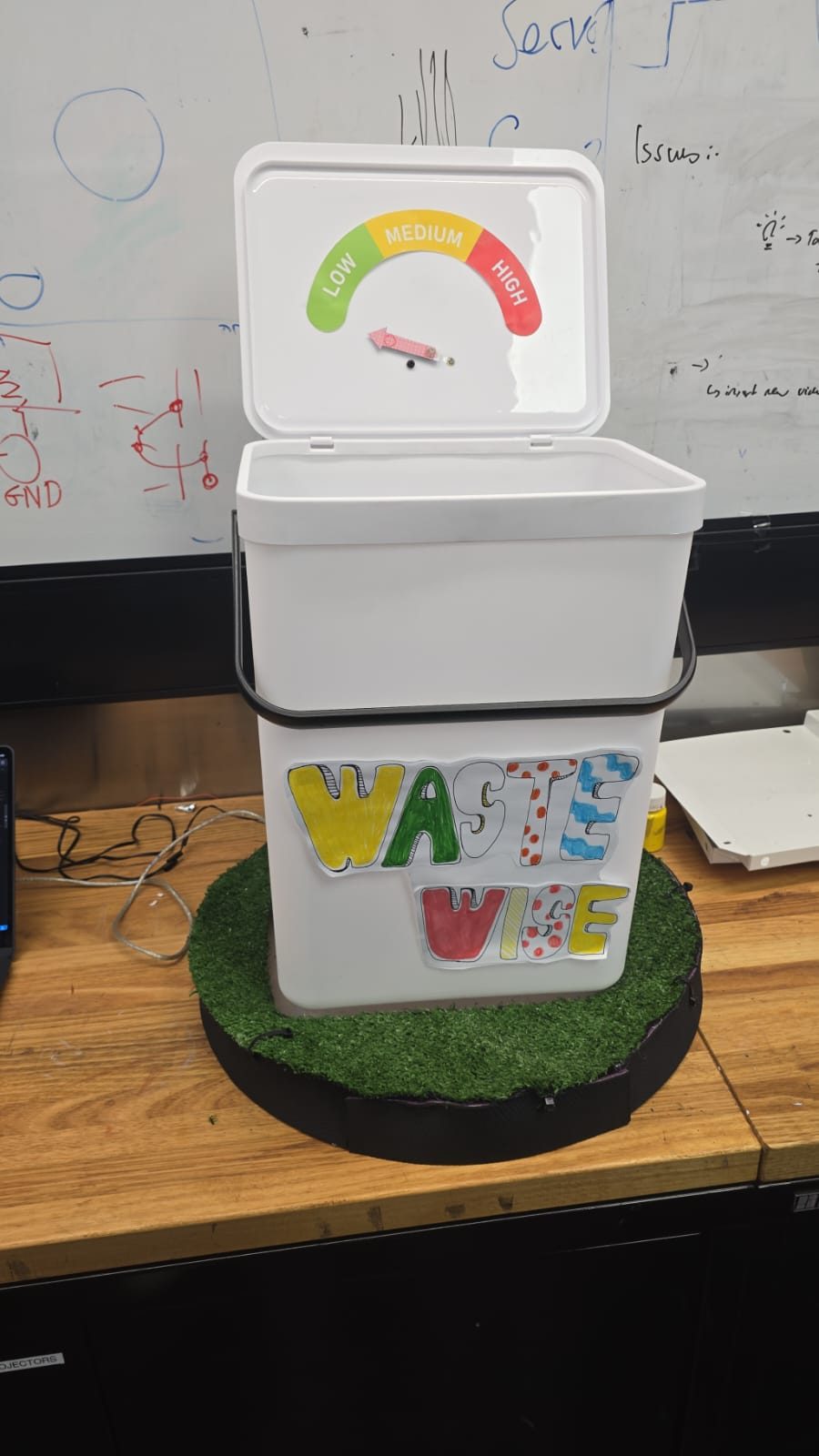
Prototype — Iteration 1
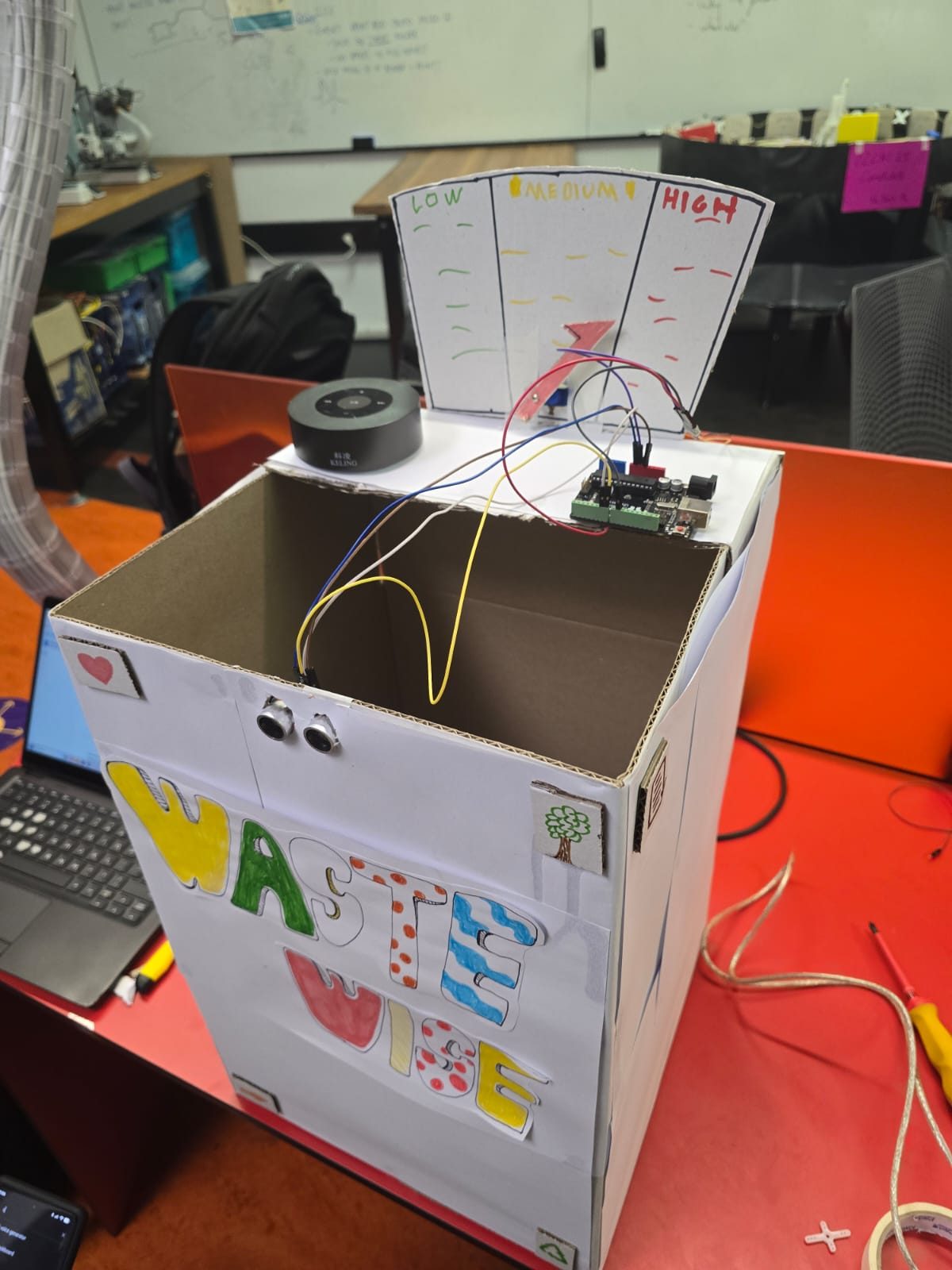
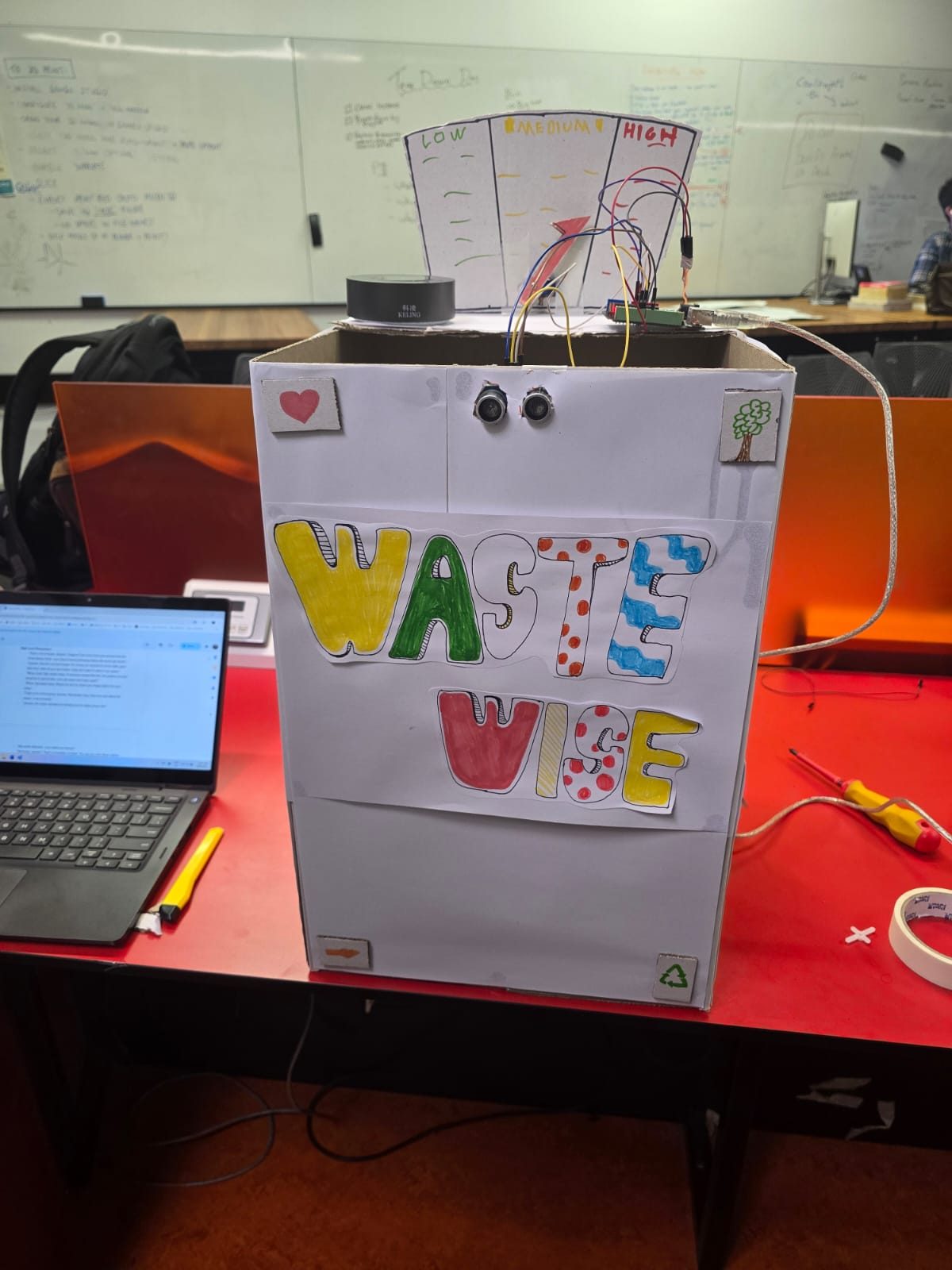
The first build was about proving the core feedback loop in a way users could instantly understand.
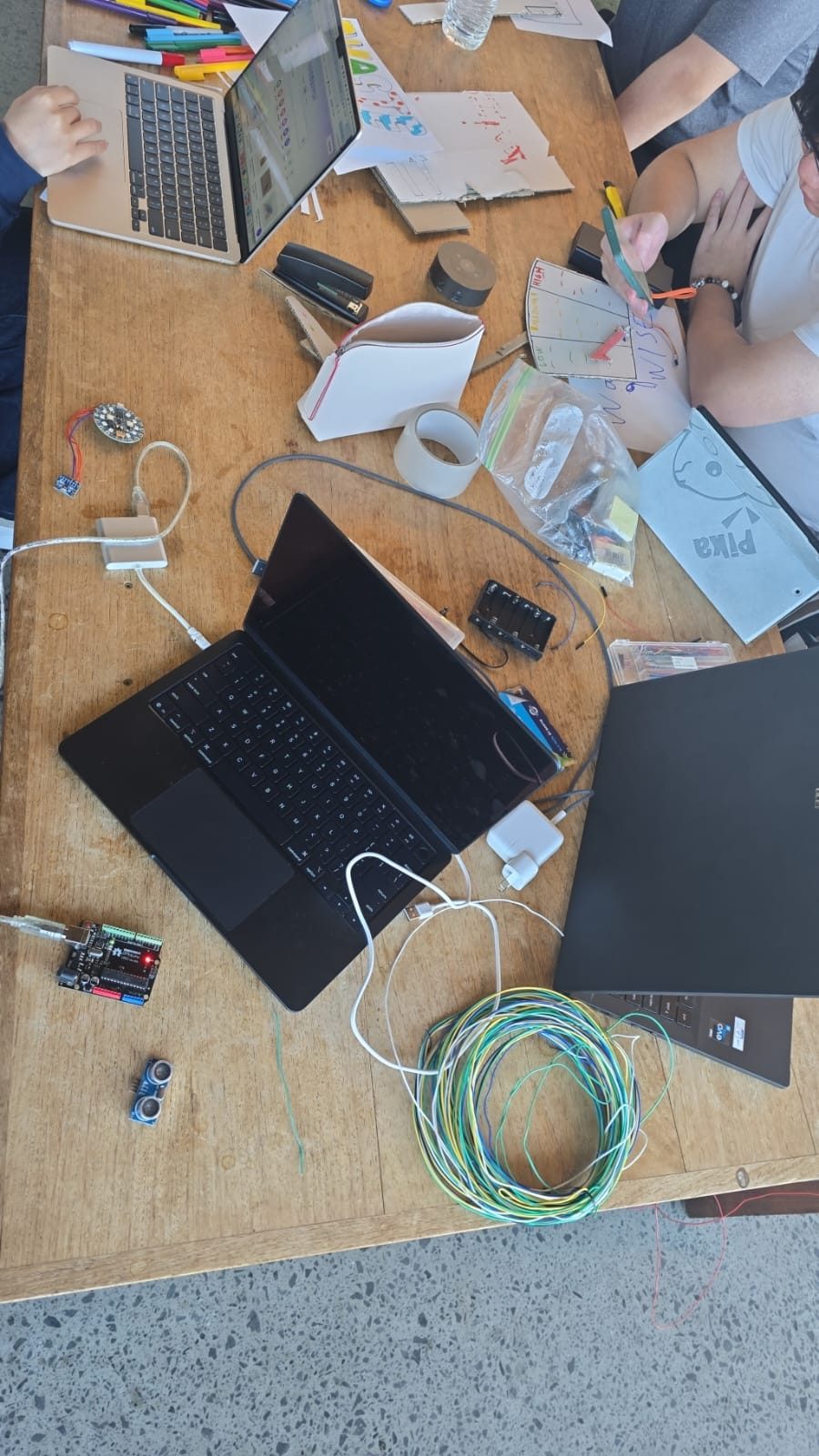
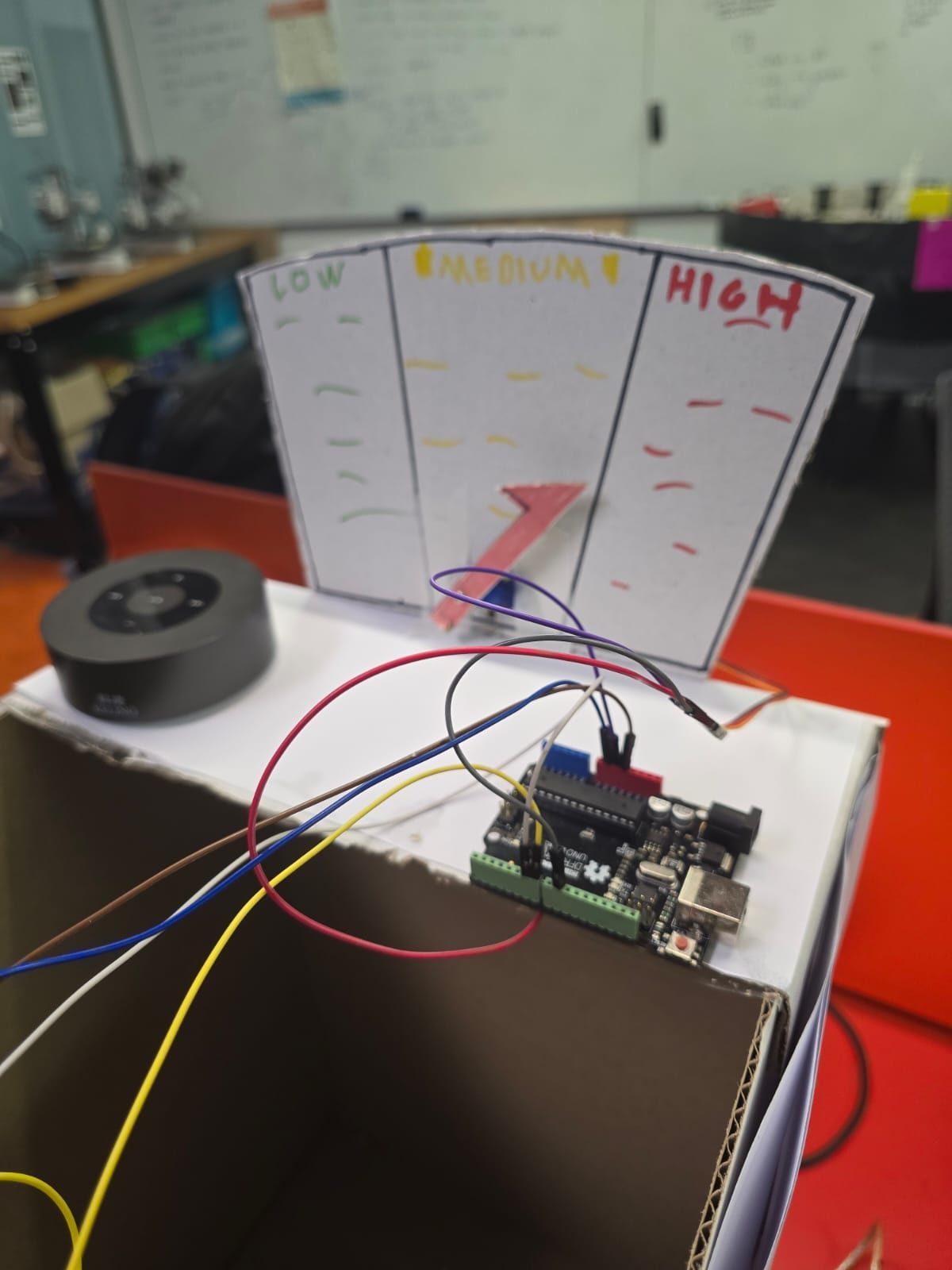
We constructed a physical severity meter using an ultrasonic sensor + servo-driven needle to represent
Low → Medium → High waste states, then paired it with recorded voice prompts that were initially simulated manually due
to time/equipment constraints. I handled the Arduino coding, wiring/soldering, and installation, then
presented the technical rationale during Demo Session 1.
Goal: make the interaction legible in 3 seconds
This iteration validated that a moving physical meter instantly communicates “severity,” and let us rapidly test
the tone/timing of prompts without over-engineering too early. It also surfaced practical build constraints
(stability, wiring robustness) that directly shaped iteration 2.
Prototype — Iteration 2
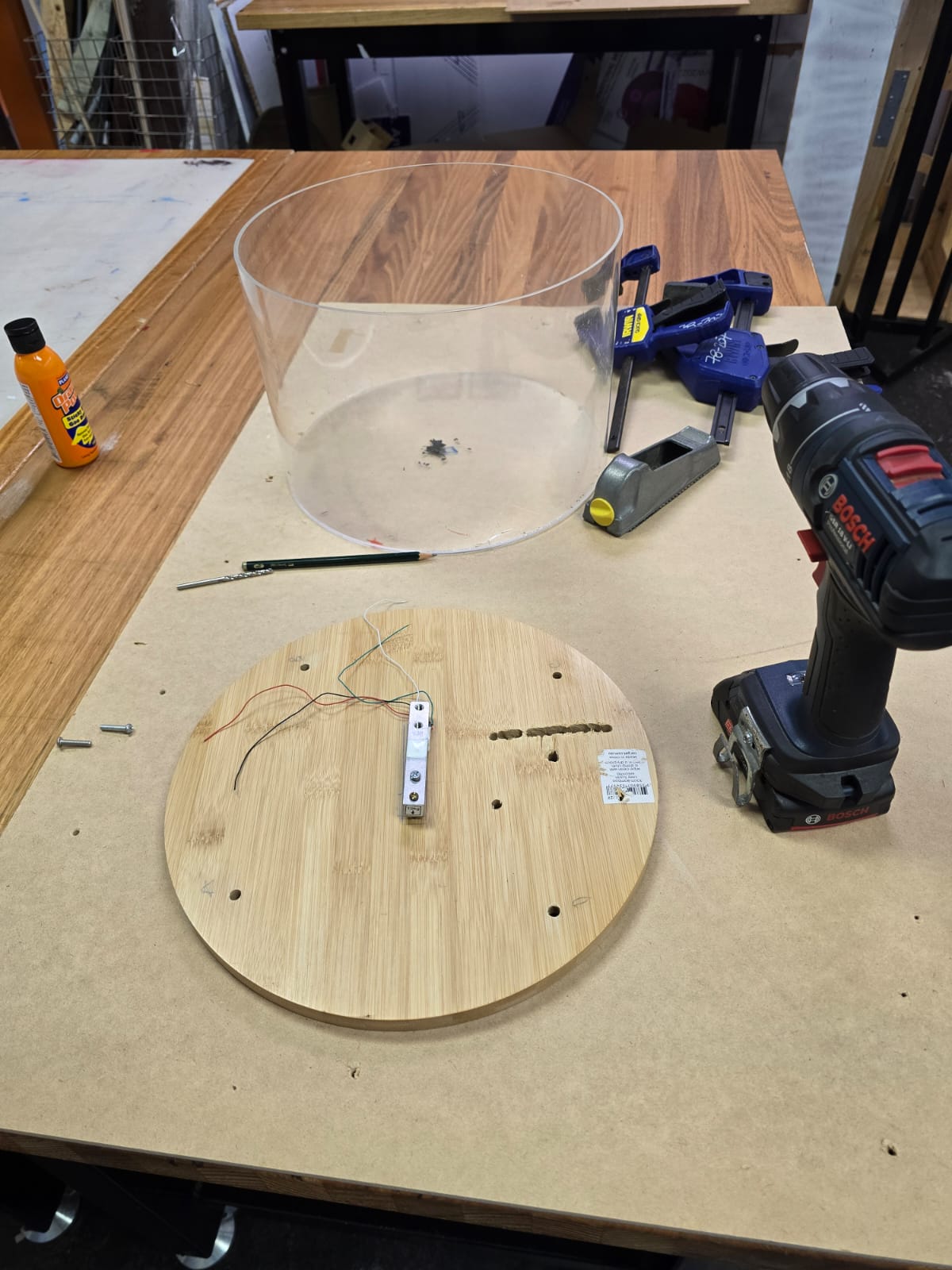
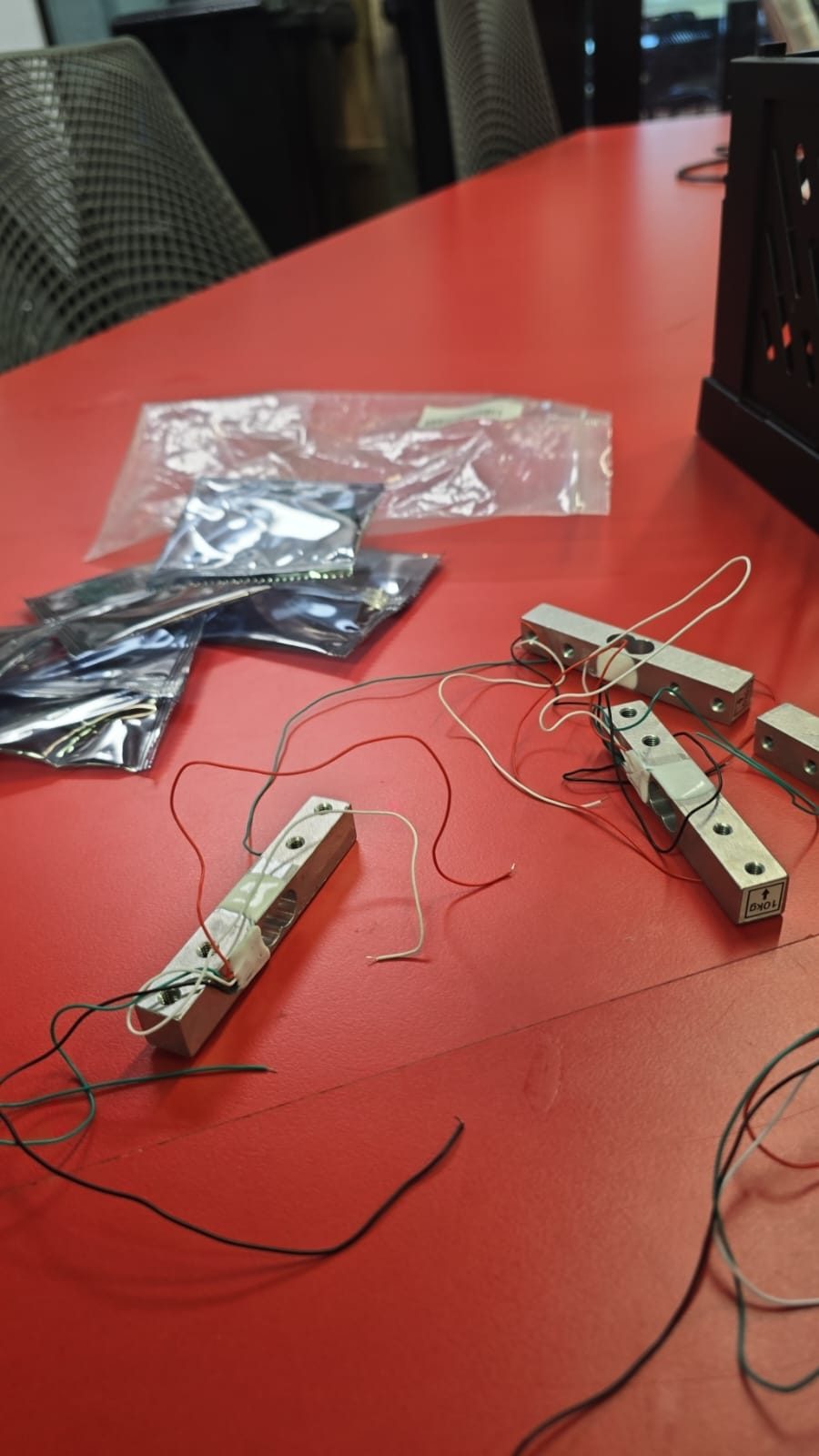
Iteration 2 focused on credibility + precision. Based on evaluation feedback, we replaced proximity-based
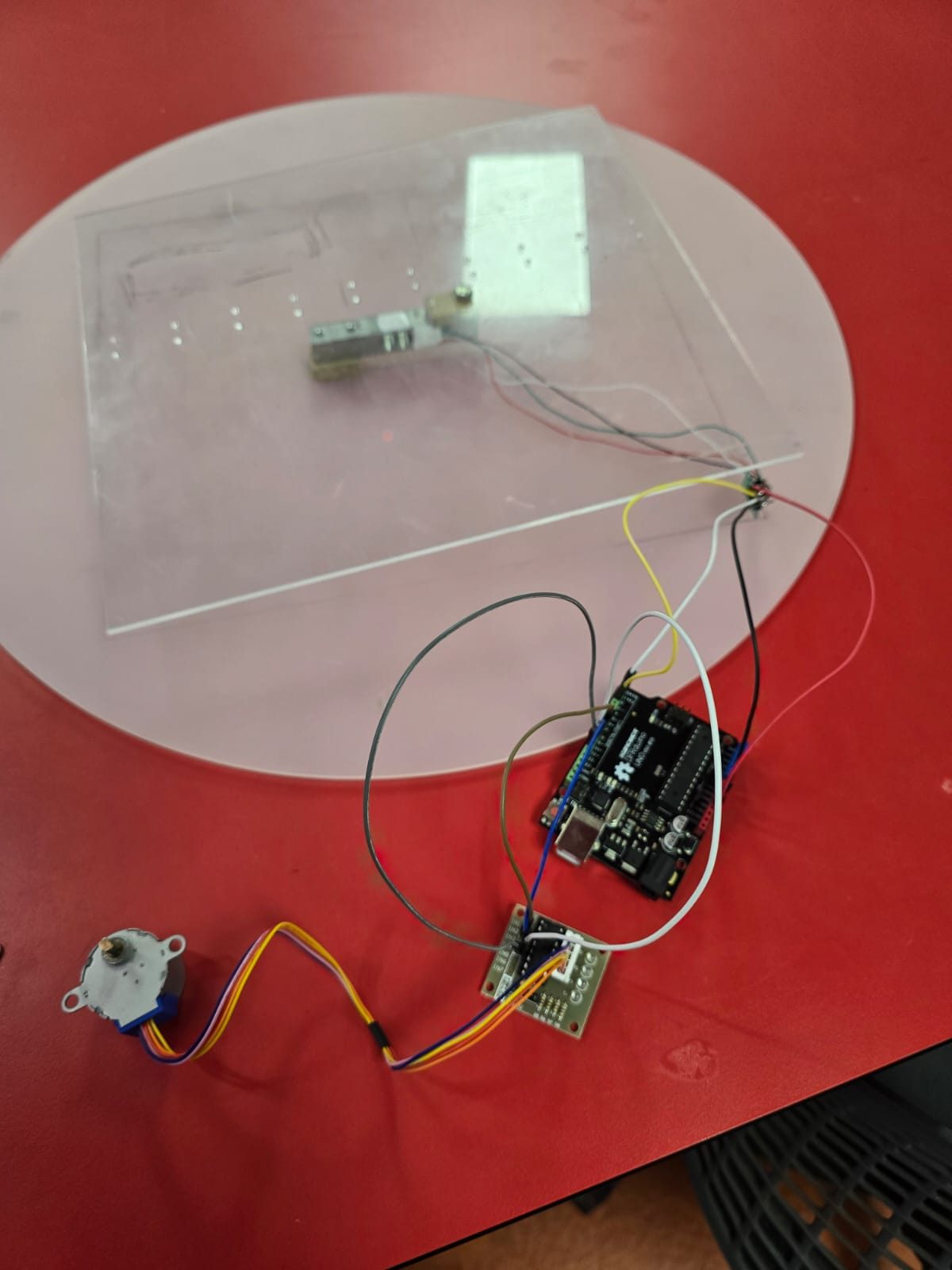
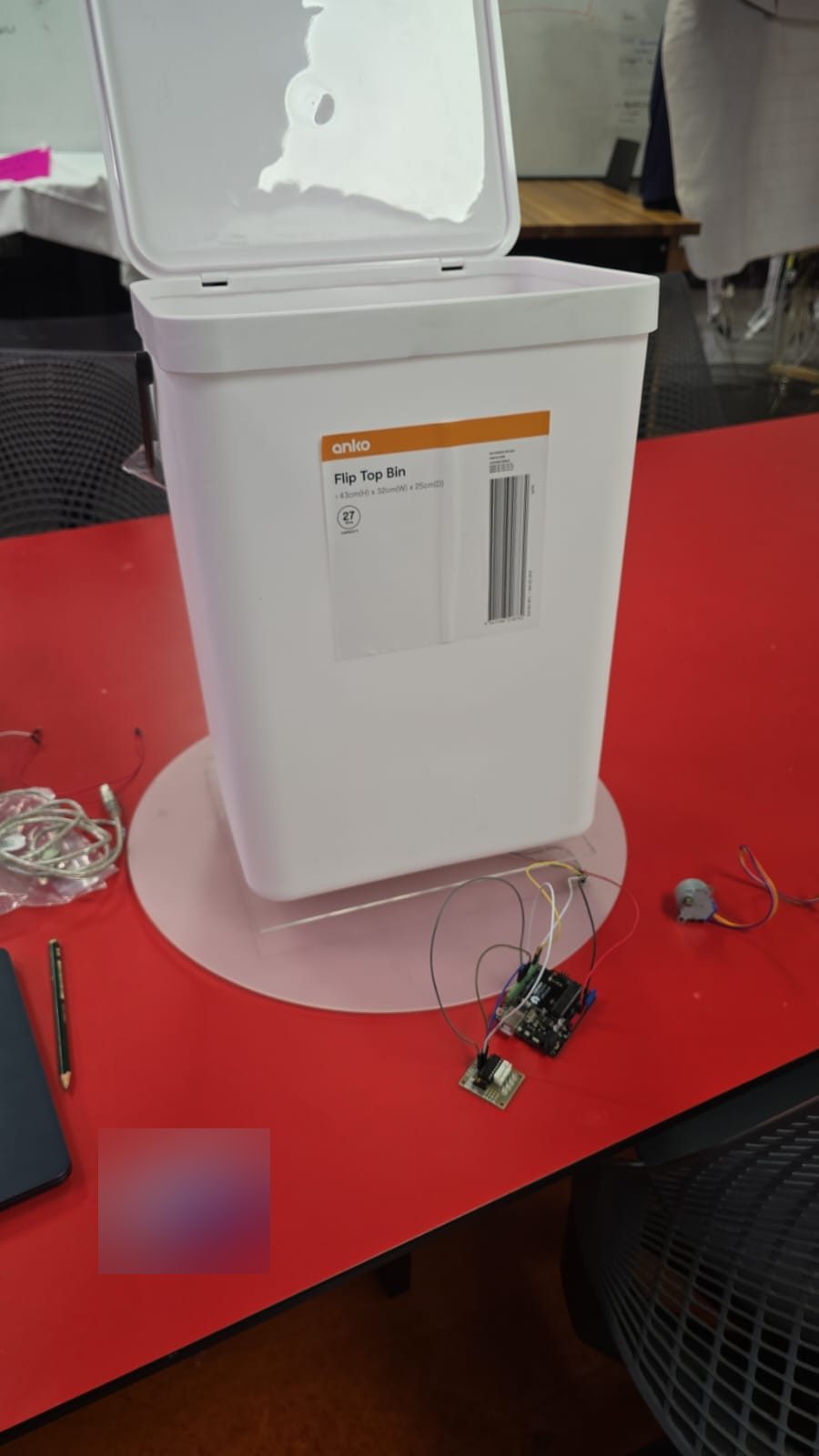
detection with a load cell weight sensor so the bin responds to the real quantity of waste. I redesigned the
physical build for stable readings using a dual-plate suspension system, then upgraded the meter mechanism by
replacing the servo with a stepper motor for smoother, more accurate needle movement. This version also moved
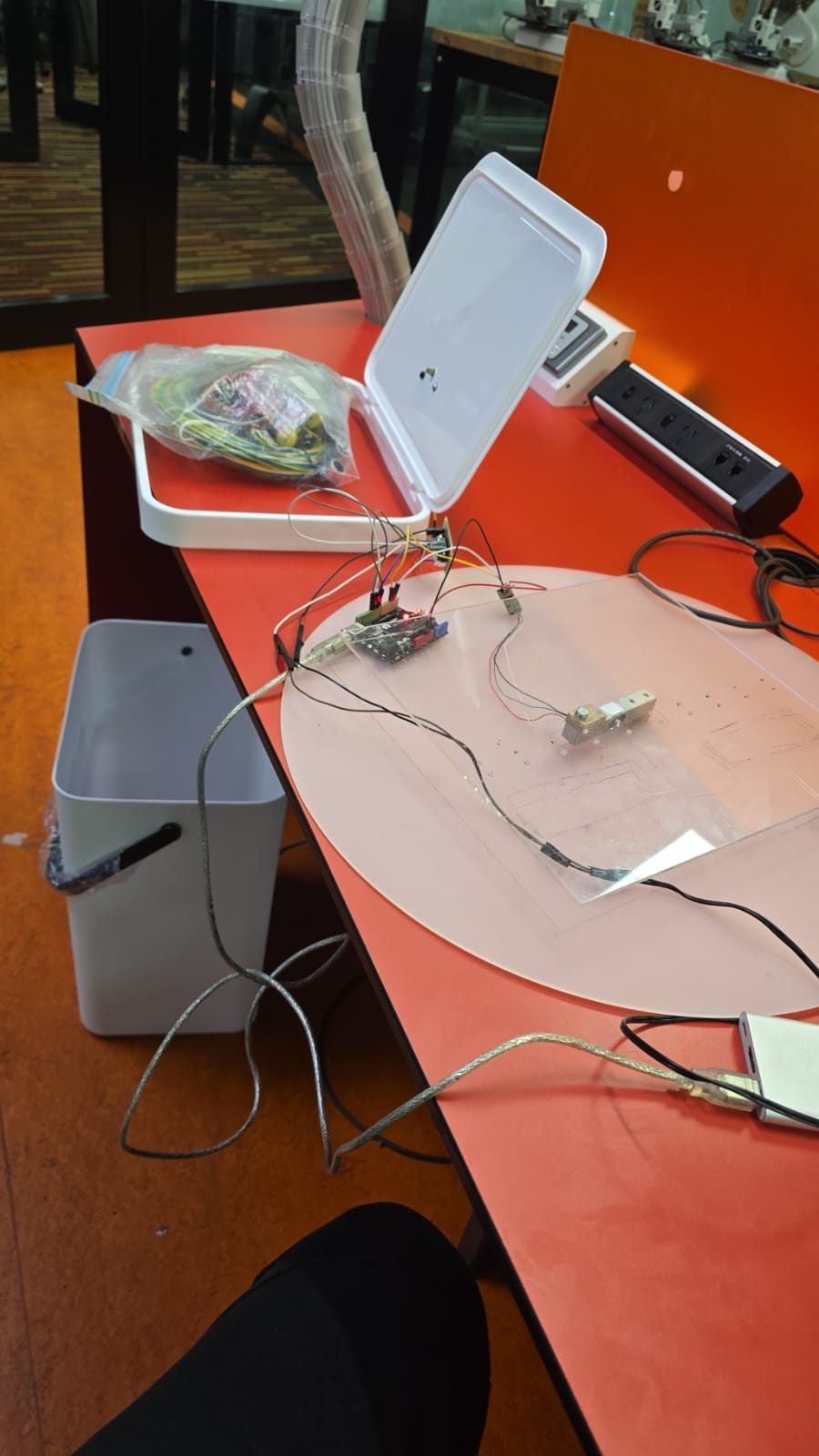
toward a complete loop: weight-triggered feedback with an emphasis on audio within a 1–3 second window and
AI-generated prompts (Python + Arduino) that adapt tone/content to keep the experience engaging rather than nagging.
Goal: make the feedback feel “earned”
Weight-based sensing made the system feel more trustworthy, and smoother meter motion made state changes easier to read.
Together, these upgrades strengthened the emotional impact—users can connect “how much I wasted” with an immediate,
understandable response.
- Built for iteration: moved from fast validation (Iteration 1) to high-fidelity sensing + calibration (Iteration 2).
- UX-meets-systems thinking: mechanical stability and signal accuracy were treated as UX problems, not just hardware tasks.
- AI integration readiness: designed the prototype to support adaptive, non-repetitive prompts driven by real sensor events.
Final Prototype
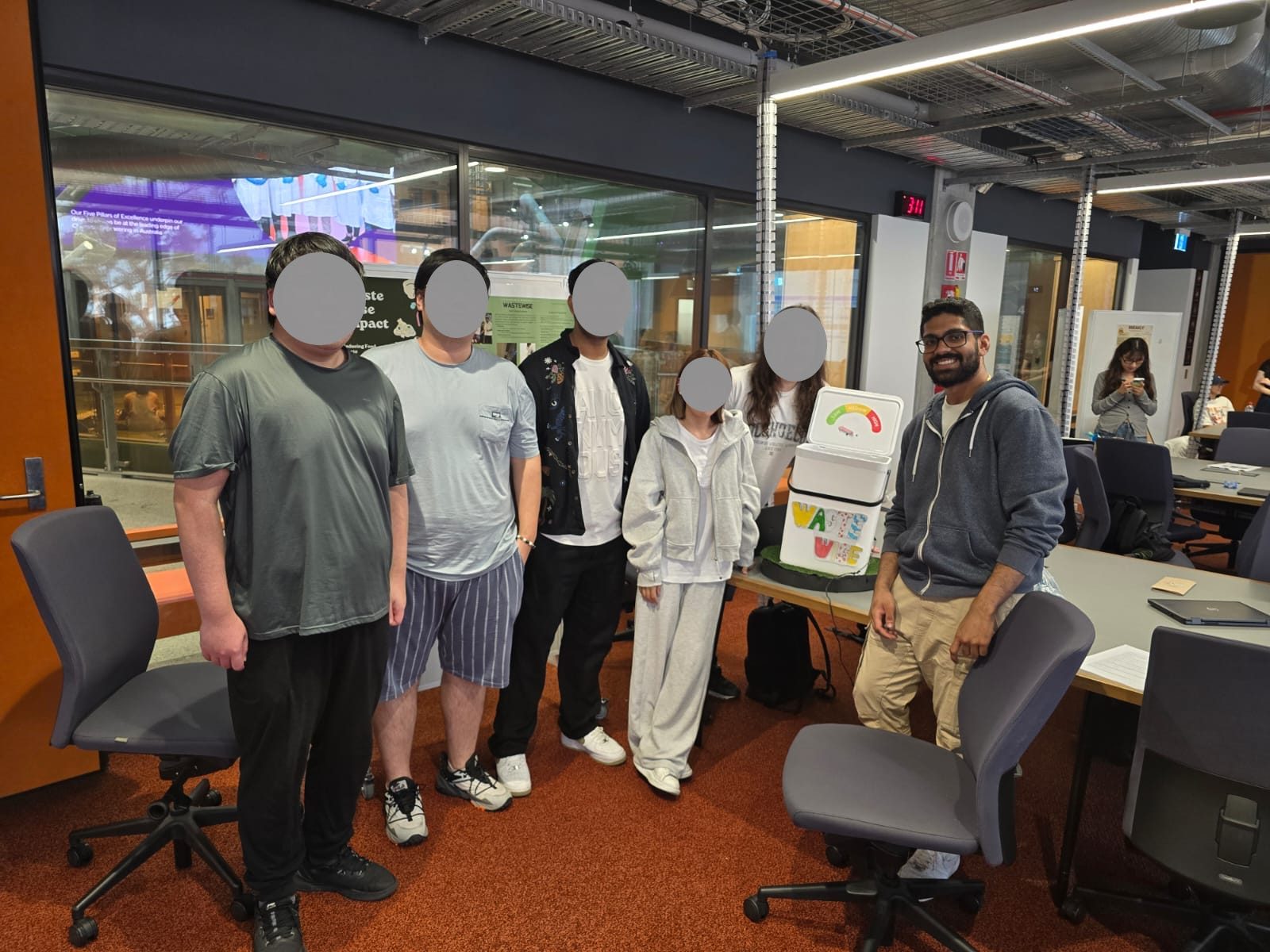
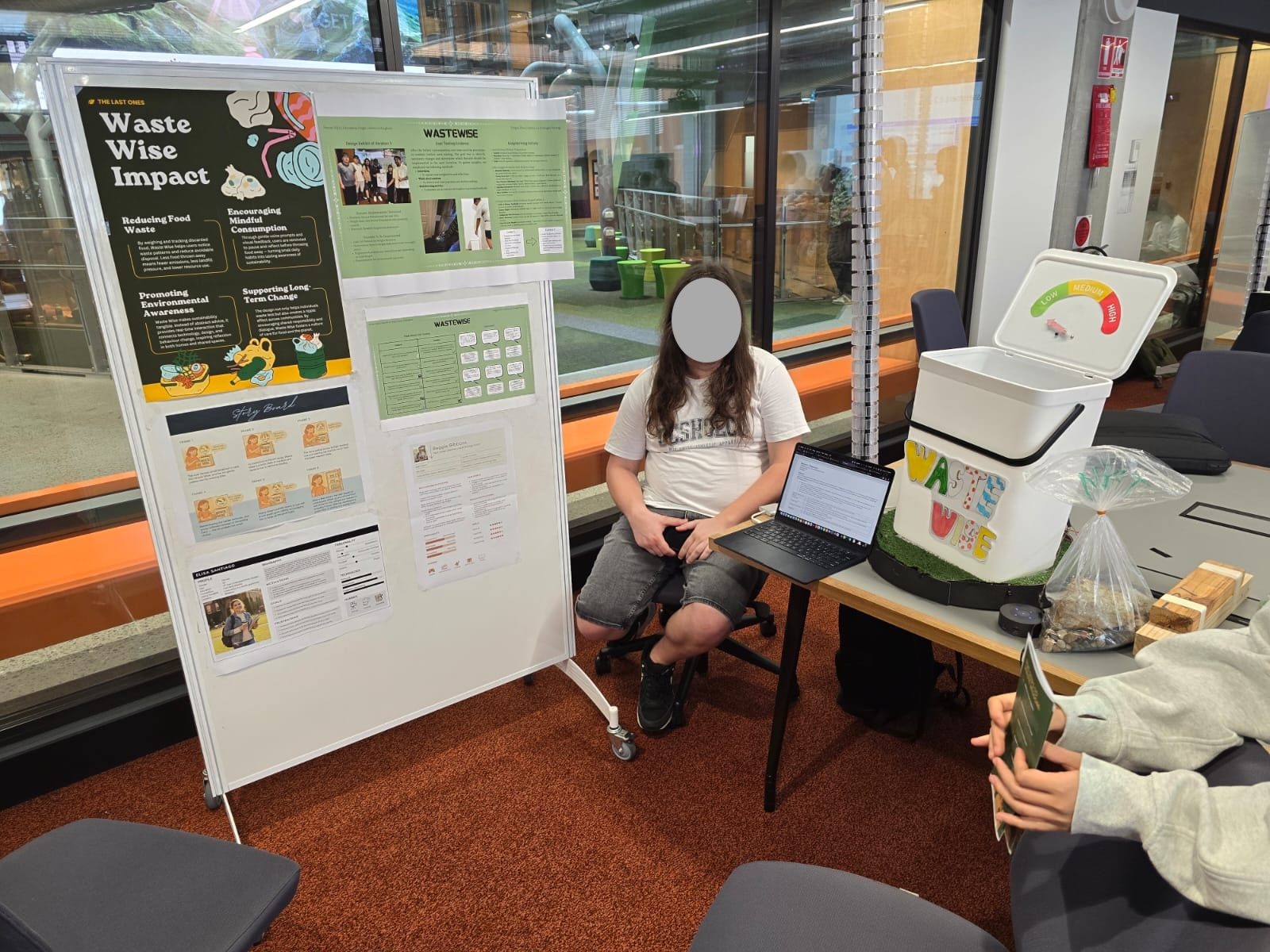
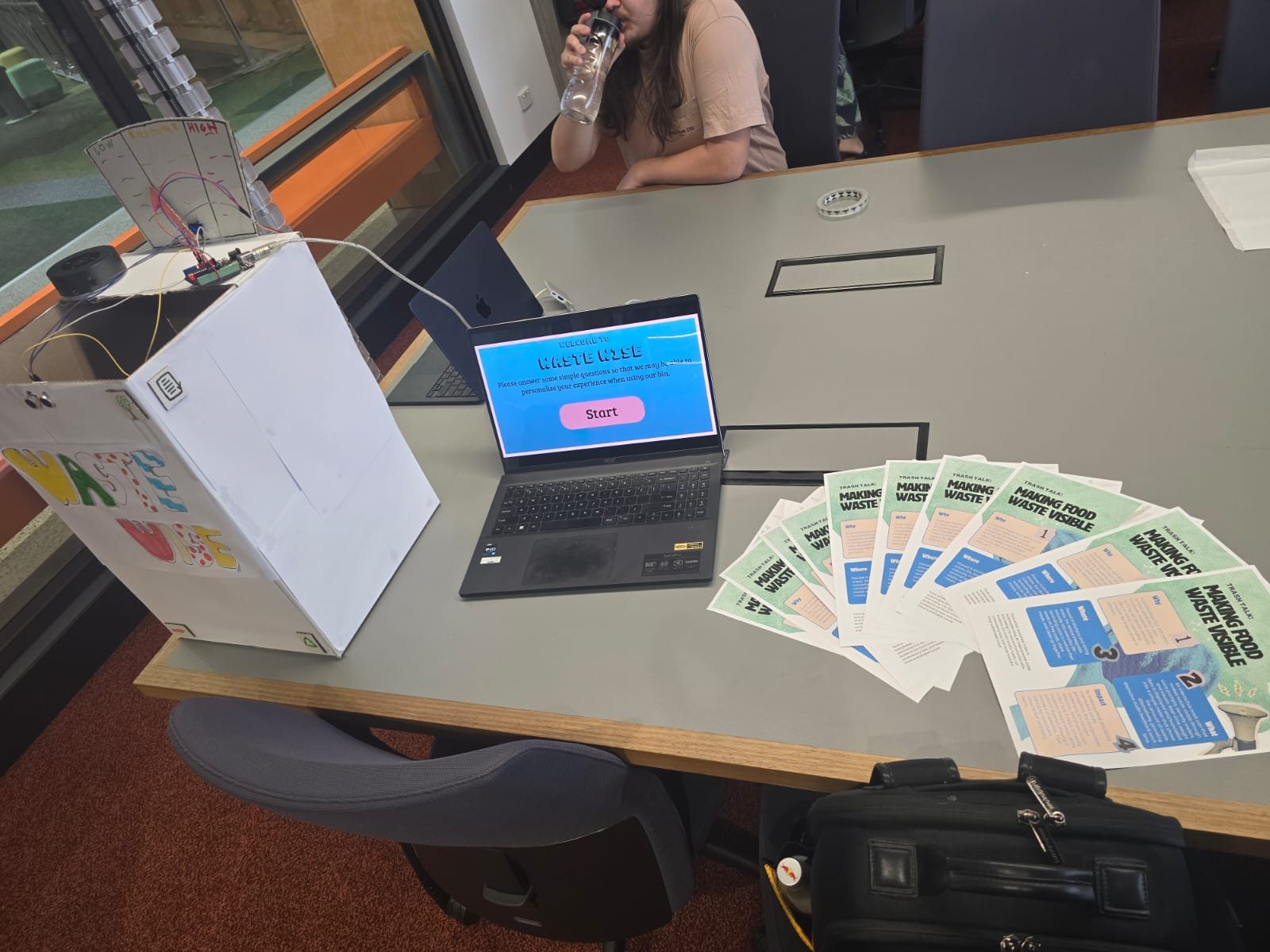
Final prototype demo: a complete sensing → feedback loop that’s fast, legible, and “walk-up ready.” Built to validate real behaviour change UX through credible system behaviour, not just concept storytelling.
Key Learnings
Waste Wise taught me that behaviour-change UX only works when the system is trustworthy. The “experience” lives in calibration, sensor stability, and feedback timing—if the data is noisy or the response is inconsistent, users stop believing it, no matter how strong the concept is. Treating reliability as a UX requirement is directly transferable to real products where adoption depends on consistent performance.
It also reinforced iteration like real product work: validate the loop fast with a low-fi prototype, then invest engineering effort only where testing proves impact (e.g., moving from proximity → weight sensing, servo → stepper for clearer state changes). This mirrors professional delivery—ship something testable, learn quickly, and refine toward measurable outcomes rather than polished storytelling.