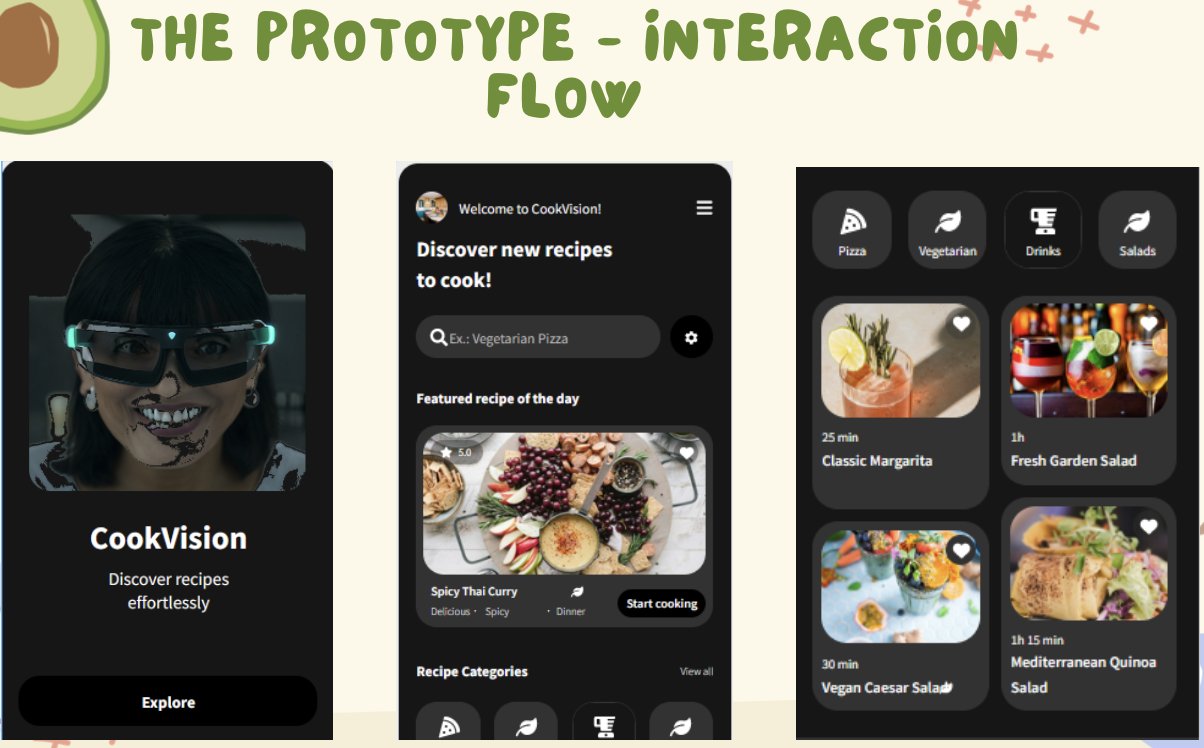
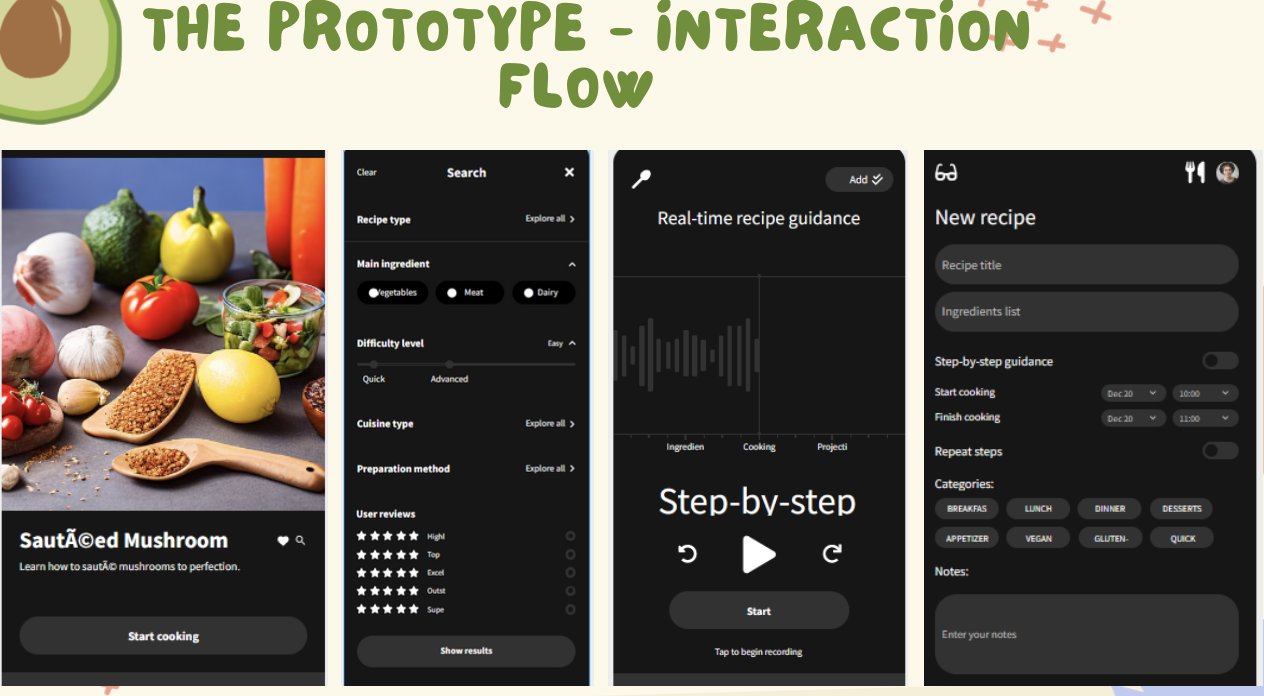
CookVision: the AR direction
Recipe discovery, filters by ingredient and difficulty, and real-time, step-by-step guidance with replay so users learn the technique rather than depend on the device.
A student-first meal kit service that makes healthy home cooking as easy as ordering takeaway, chosen over an AR cooking concept through three rounds of user research.
← Back to Projects
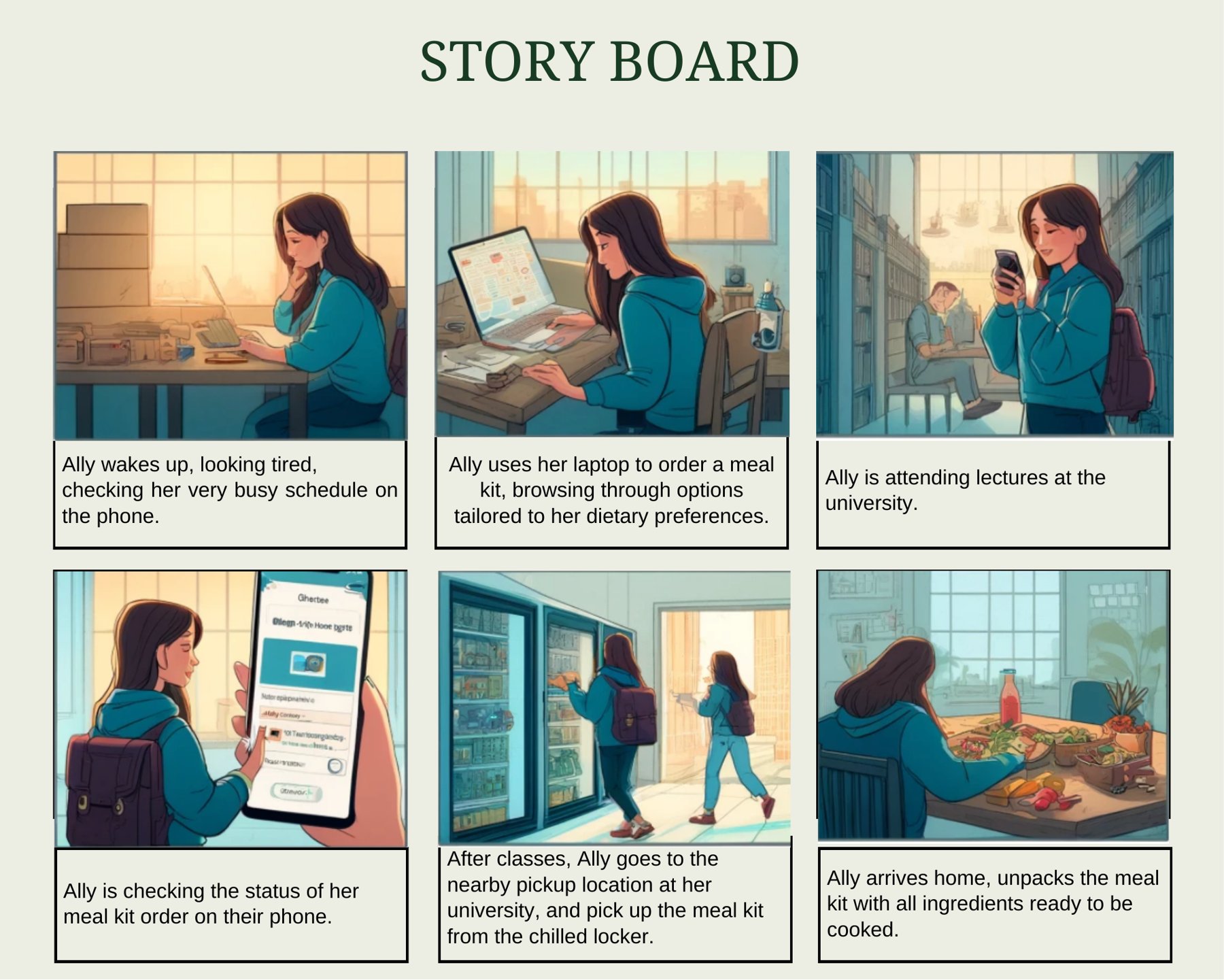
Campus Meal Kits is a service concept that helps university students eat better by making home cooking as easy as ordering takeaway. Students choose kits tailored to their dietary preferences, then collect them from a chilled locker on campus after class. Our six-person team, The Machine, built it in DECO3800 Design Computing Studio 3 at The University of Queensland (2024). We started with two competing ideas, AR cooking glasses and meal kits, and let three rounds of interviews decide which one to pursue.
UX research, interview planning and facilitation, insight synthesis, and concept refinement: validating student needs and shaping the final meal-kit direction.
Young Australians aged 15–34 are the heaviest users of food delivery apps, and research shows that diets high in takeaway are often unbalanced, contributing to weight gain and nutritional deficiencies. Most menu items on the leading delivery platforms are high in saturated fat, salt and sugar.
Students know home cooking is cheaper and healthier. The barrier is time, effort and convenience, not awareness. Our goal was to make the healthy option the easy option.
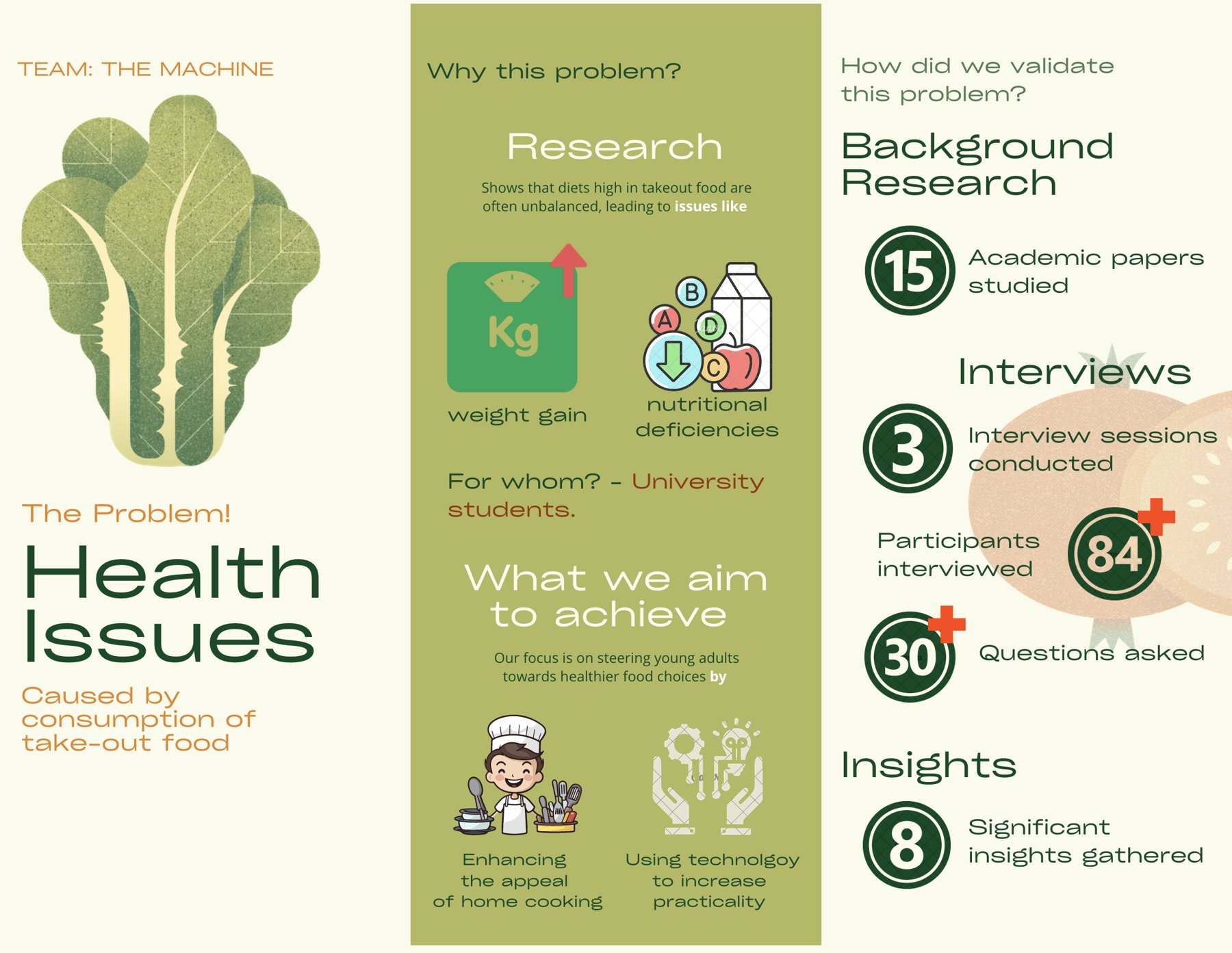
We ran three rounds of interviews with UQ students aged 16–30, refining the questions after each round. In total we spoke to more than 80 participants and distilled 8 key insights.
The research pointed to two solutions. The first was CookVision, AR glasses with a companion app that guides you through a recipe step by step and rewards you for cooking. The second was meal kits: pre-portioned ingredients for recipes the student picks. We mocked up CookVision's app flow so participants could react to something concrete.
Recipe discovery, filters by ingredient and difficulty, and real-time, step-by-step guidance with replay so users learn the technique rather than depend on the device.
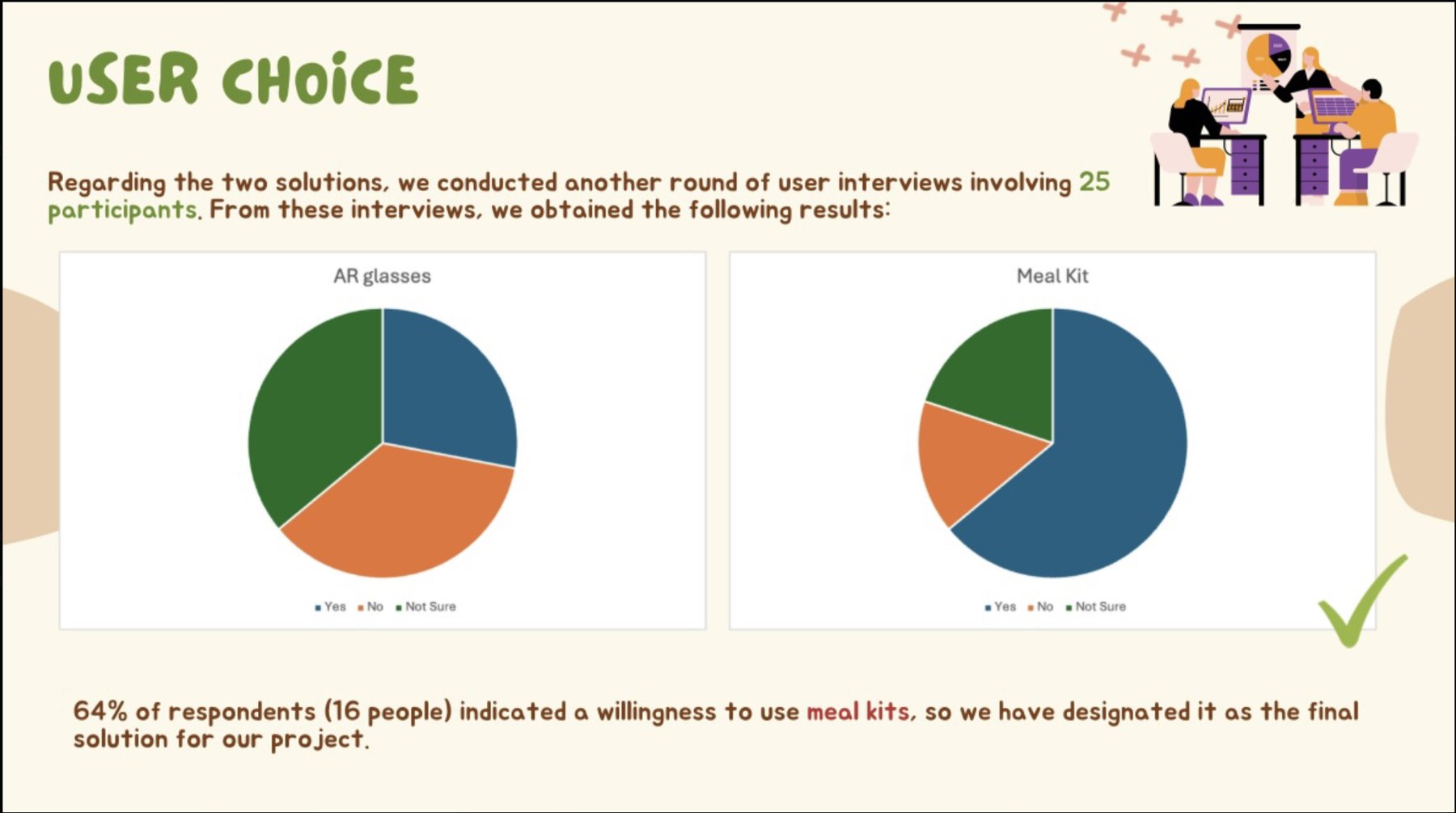
In round 3, 64% of participants (16 of 25) said they would use meal kits, well ahead of the AR glasses. The glasses also raised real barriers: 29% worried about price (an estimated A$150–200 for a consumer device, and around A$4,000 for current AR headsets), and 12% had safety or comfort concerns. We chose meal kits as the final direction.
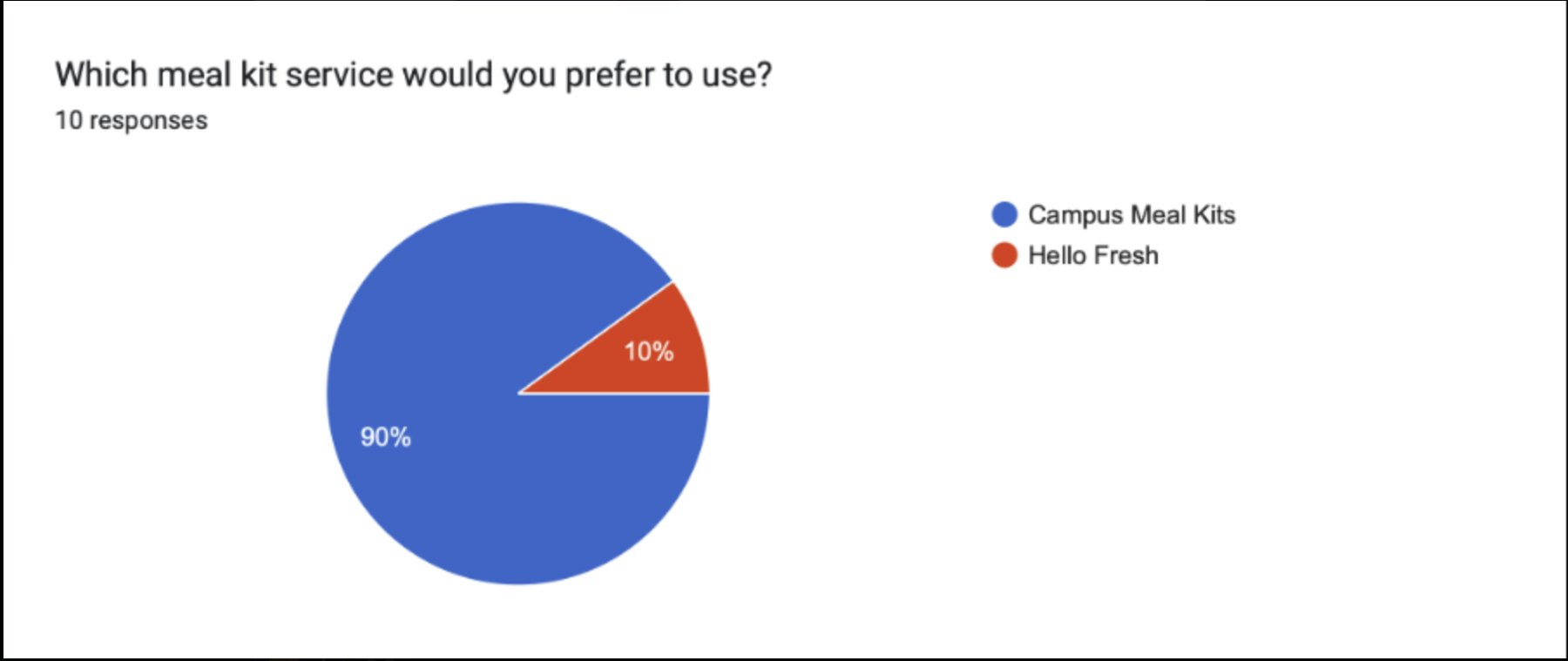
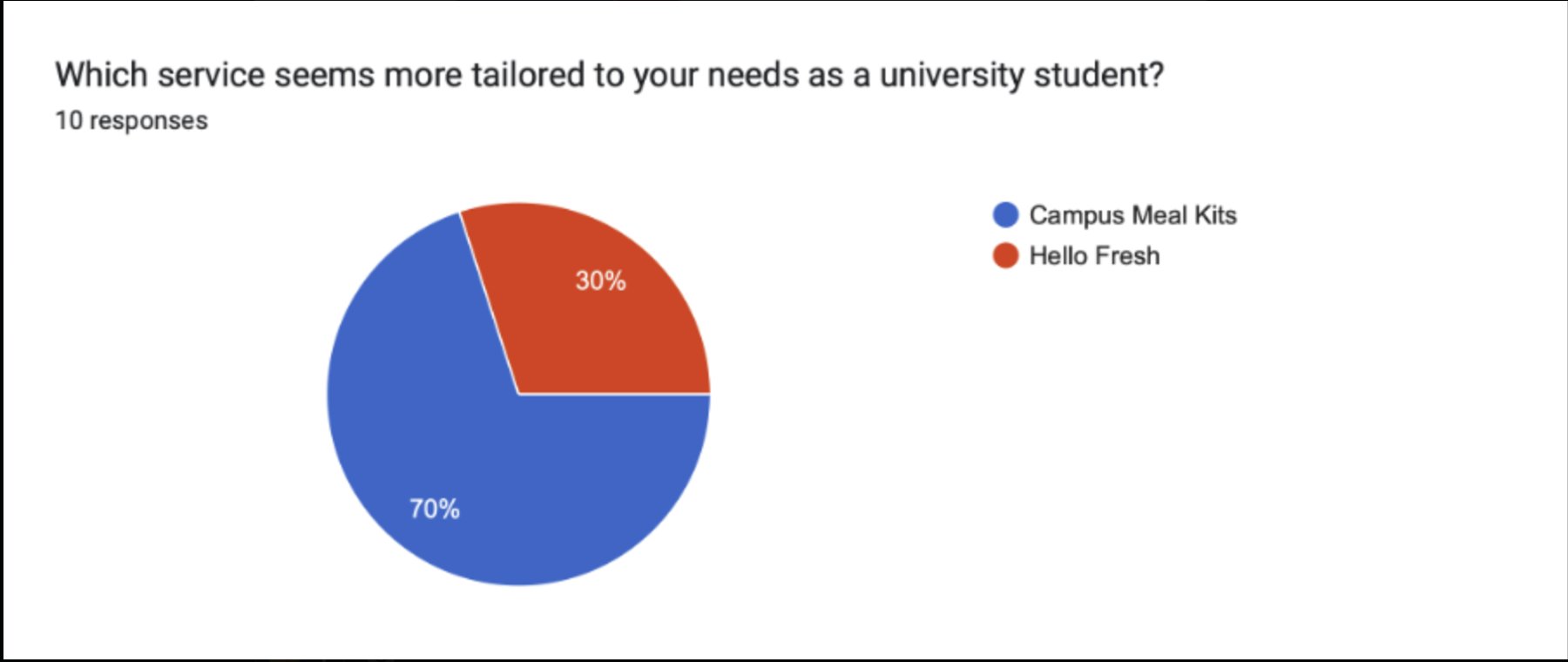
HelloFresh was the obvious competitor, so we tested our concept against it directly. 90% of respondents said they would choose Campus Meal Kits, and 70% said it felt more tailored to student life.
Campus Meal Kits is built around a student's actual day: order in a minute, collect on the way home, cook in minutes. Kits are tailored to dietary preferences and come pre-portioned, so there is nothing to plan, little to waste, and no trip to the supermarket.
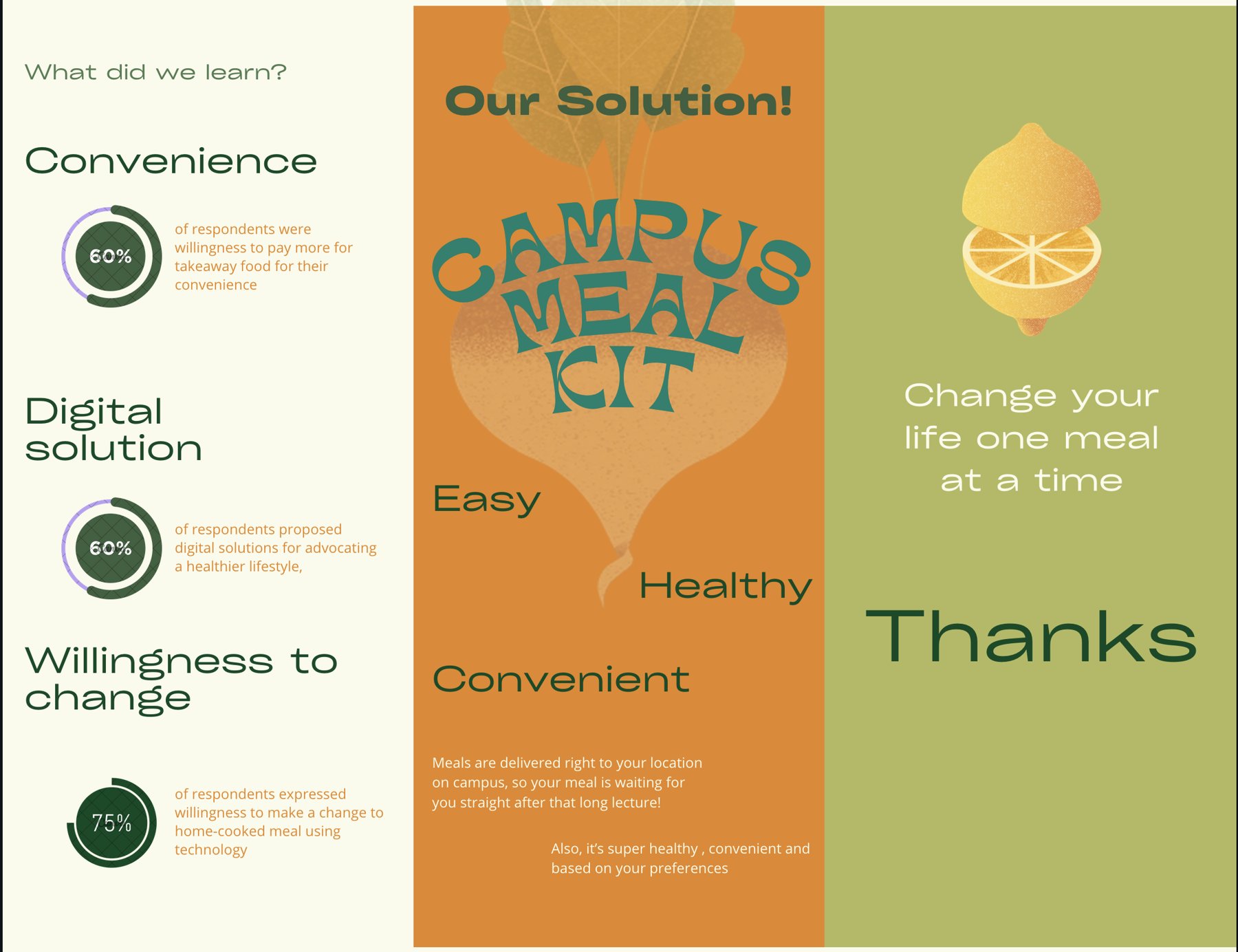
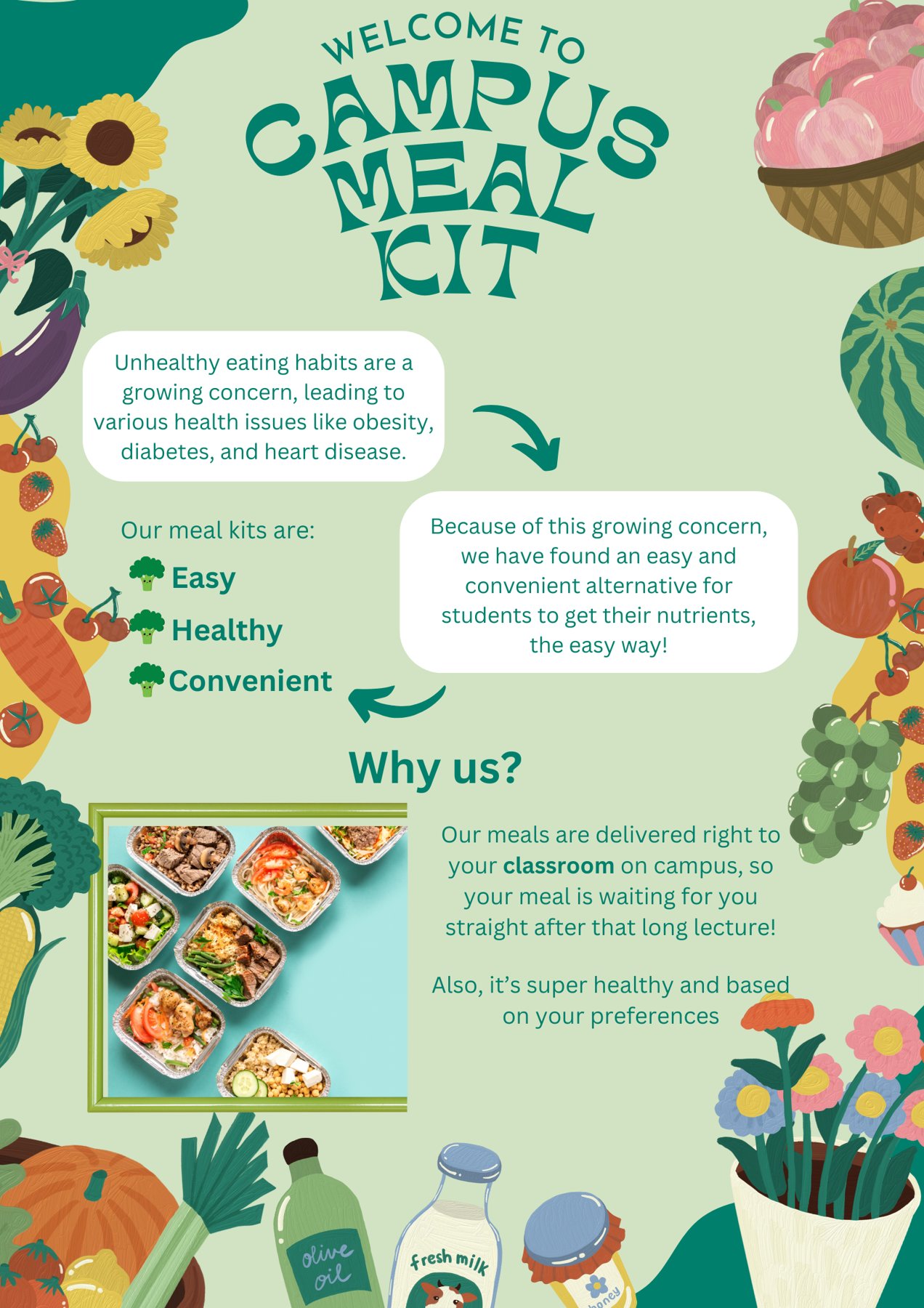
We communicated the research and the final concept through a two-sided brochure and a promotional poster for students.
The biggest lesson was to let users choose between real options. The AR glasses were the more exciting idea for us as designers, but putting both concepts in front of students showed that cost, comfort and everyday practicality mattered more than novelty. Testing early saved us from building the wrong thing.
It also showed that convenience is the real competitor. Students weren't short of information about healthy eating; they were short of time. A solution only works if it is as easy as the habit it replaces, which is why the final design centres on a pickup point students already walk past.