A mobile app that helps university students quit smoking with goal tracking, streaks and location-aware
support that steps in when temptation is highest.
Resist is a quit-smoking companion designed for students at The University of
Queensland. It shows how much time and money you've saved, rewards every smoke-free day with a
streak and a health milestone, and, when you walk near a spot where you usually smoke, asks whether
you'd like to reach out to someone. We designed it in DECO3500 Social & Mobile
Computing (2024) through three rounds of user research and Figma iteration, built a working
web prototype in Next.js, and presented it at the course tradeshow.
Role:
Team project: user research (observation and interviews), iterative Figma prototyping and
evaluation, the working Next.js prototype, and tradeshow materials.
Tools:
Figma
Next.js 14, React & TypeScript
Tailwind CSS & Material UI
Google Maps API & browser geolocation
Chart.js
Vercel
Problem
Many students smoke to cope with study stress or because their friends do, and quitting is hardest in
the moments and places where the habit lives: the same bench after class, the same spot outside the
library. Existing apps such as Smoke Free and QuitNow! mostly offer education or simple reminders, with
weak social features and little personalisation.
Research pointed to two levers that matter most: social support, identified as the
biggest contributor to quitting, and behavioural triggers, the situations and
locations that set off a craving. Our challenge was to use mobile and social technology to act on both,
at the right moment.
Solution
The final design focuses on three features, each one earned through user feedback:
Track it, keep it going, get help on the spot
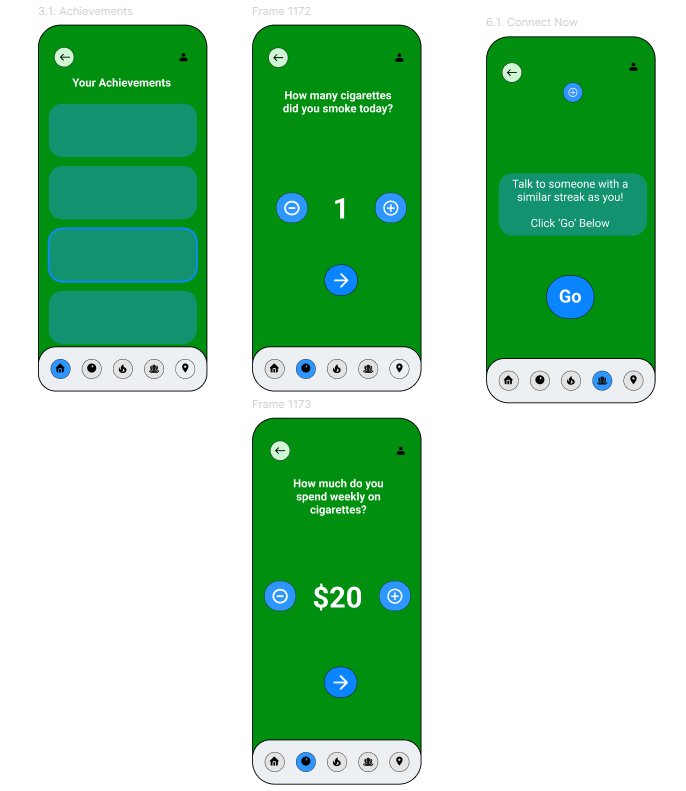
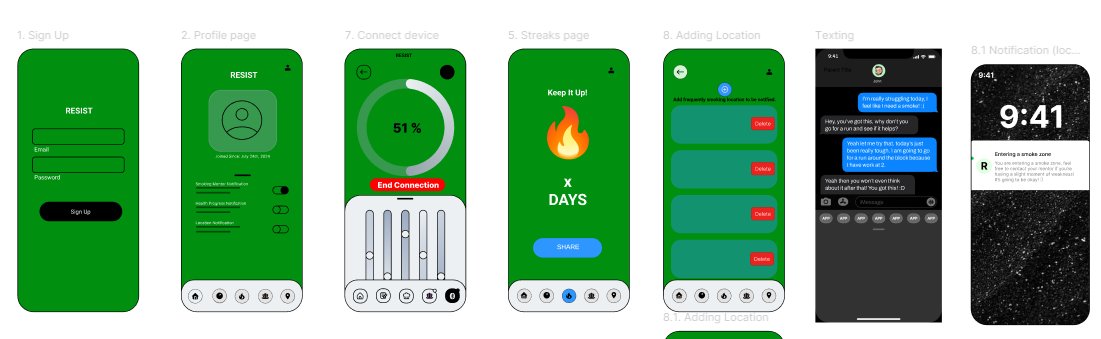
Goal tracker: compares this week's spending and smoking time with last week's, so the benefits of quitting are visible straight away.
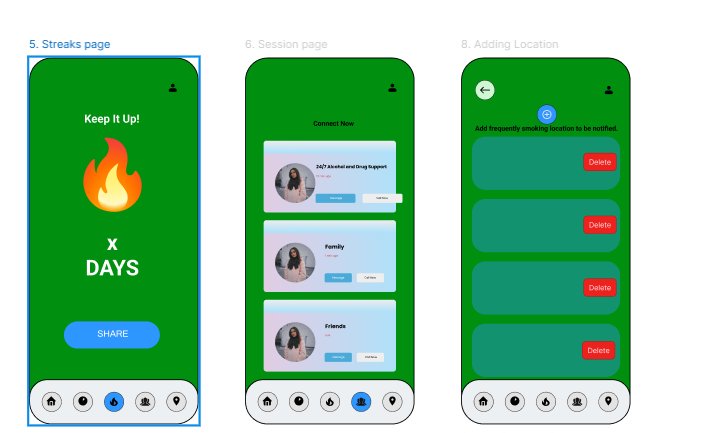
Streaks with health milestones: every smoke-free day counts. The app tells you what's improving in your body and what's coming next (for example, nicotine leaves the body by day 3 and breathing improves by day 7).
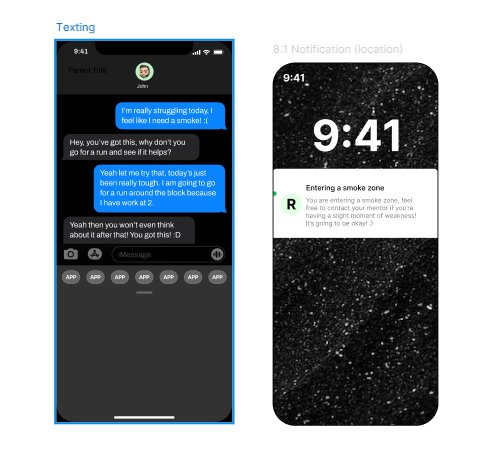
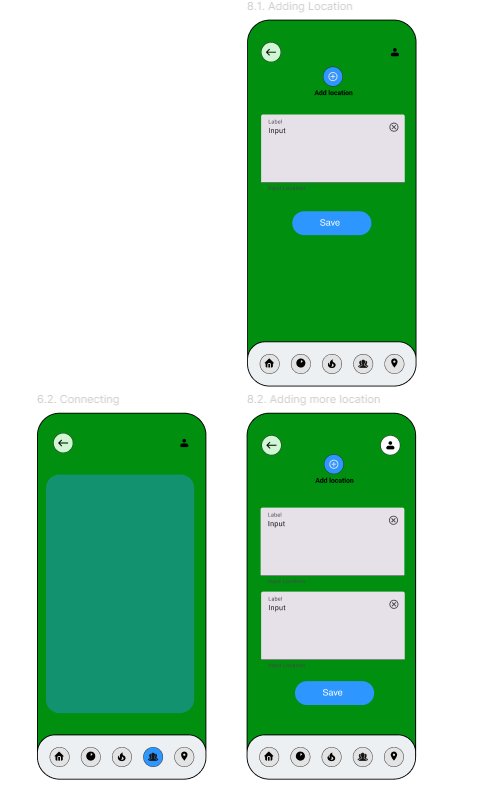
Location-based support: users pin their usual smoking spots. When they get close, Resist asks if they need help and connects them to friends, family, someone on a similar streak, or a 24/7 drug and addiction hotline.
UX Research & Design
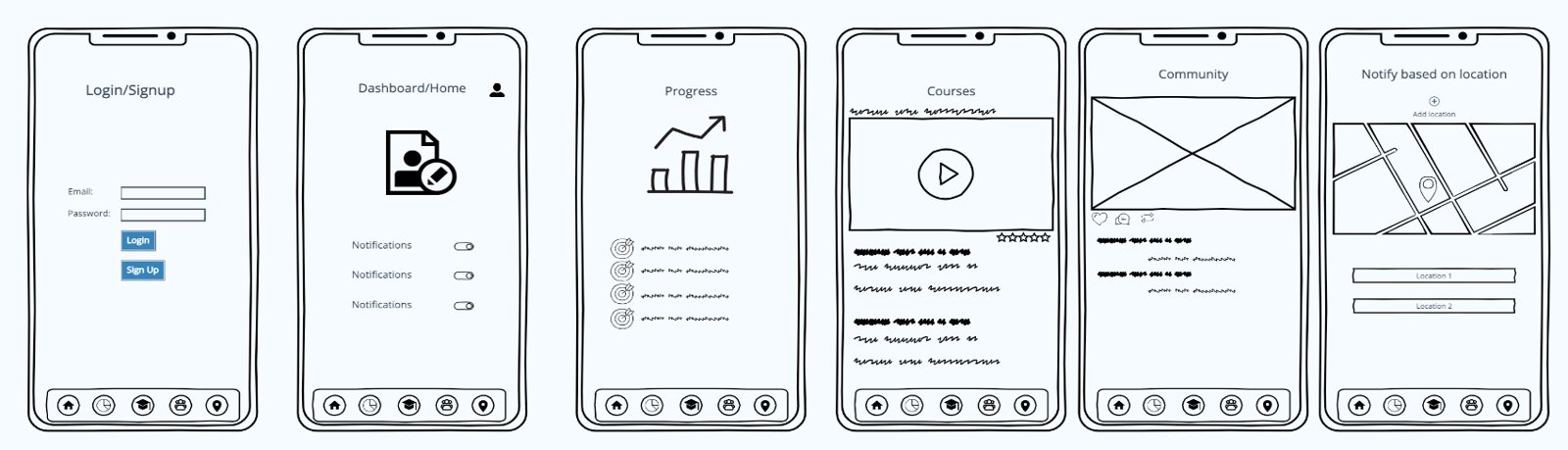
The design was shaped by a literature review, field observation, three rounds of interviews and
feedback from course stand-ups, guided by the Design for Location framework. Several of our first
ideas didn't survive contact with users, and the app is better for it.
How the design changed
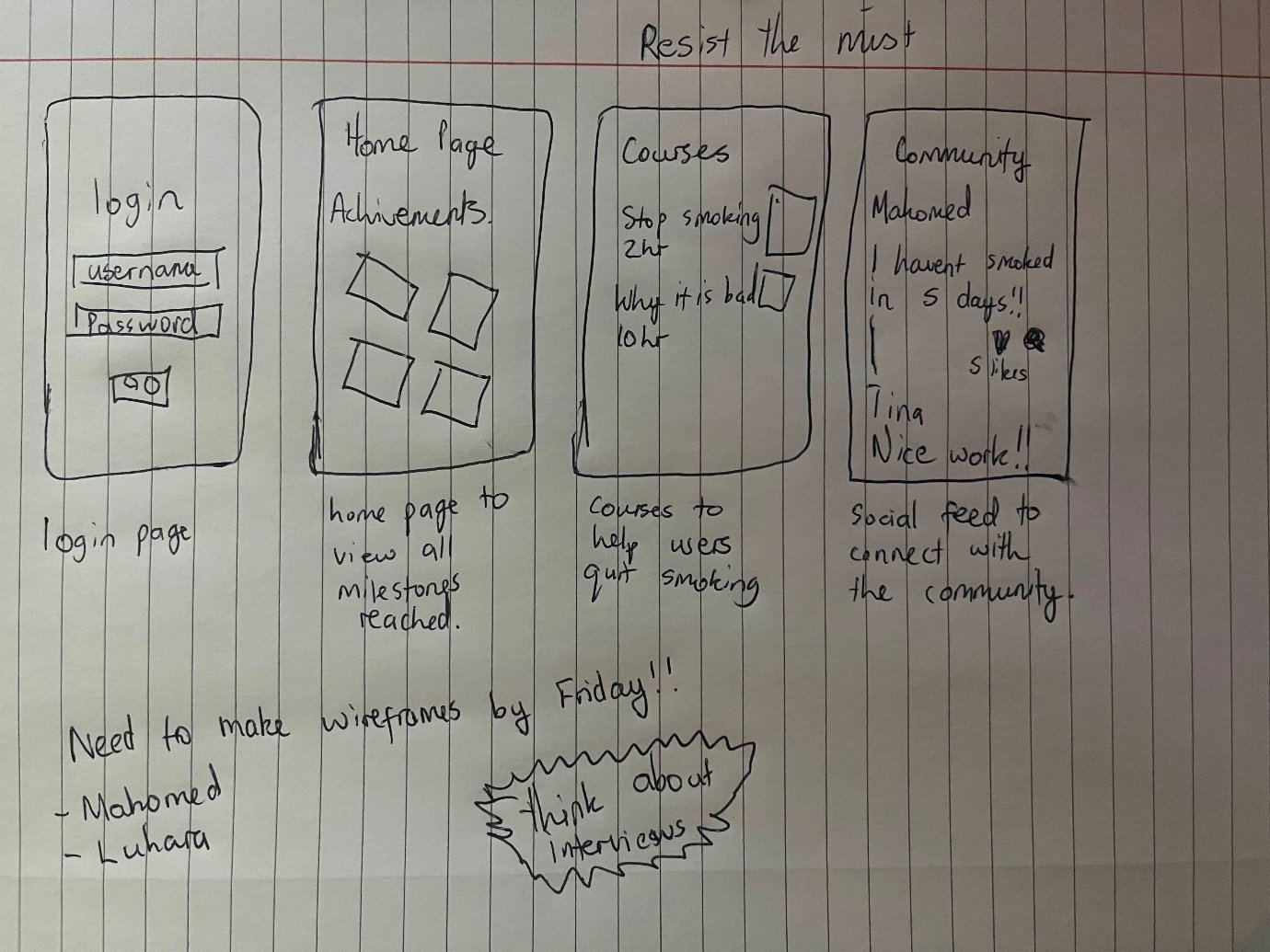
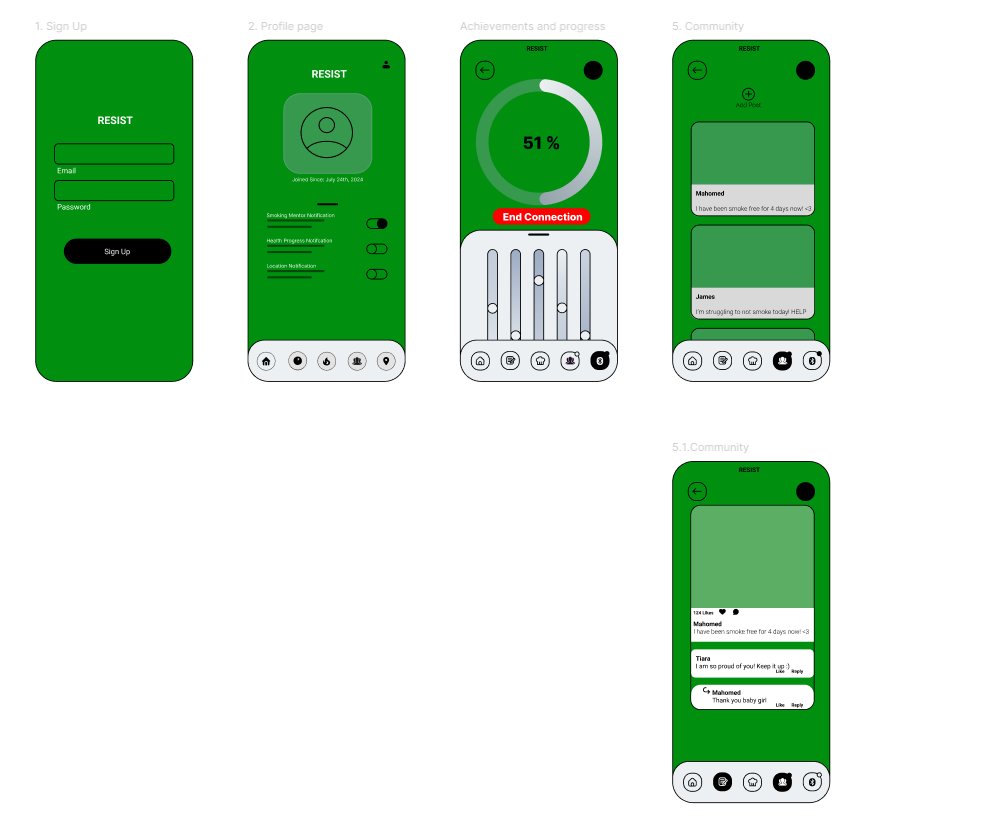
Dropped the public social feed: one interviewee's friends and family didn't know he smoked, so posting progress publicly was a non-starter. Users wanted private support, which led to one-to-one connections.
Dropped the courses: education-based (CBT-style) lessons tested poorly with busy, stressed students who wouldn't make time for them.
Added visual progress: users wanted to see what they were gaining, which shaped the weekly time-and-money goal tracker.
Added streaks: round two asked for daily motivation, so streaks now carry health messages about what's improving and what's next.
Added location triggers: users asked for help at the places they usually smoke, especially on campus, which became the geofenced support feature.
Development
The working prototype is a mobile-first Next.js 14 app written in TypeScript and
styled with Tailwind and Material UI, deployed on Vercel. It has five main screens:
stats, streaks, people, a chat view and locations. Users add smoking spots by dropping a pin on a
Google Map. While the app is open, it checks the user's position every few seconds and prompts them
when they come within 500 m of a saved spot, with a cooldown so it never nags.
Proximity check against saved smoking spots (TypeScript)
// simplified from app/locations/page.tsx
navigator.geolocation.getCurrentPosition(({ coords }) => {
  locations.forEach((spot) => {
    const metres = haversine(coords.latitude, coords.longitude, spot.lat, spot.lng);
    const cooledDown = Date.now() - (lastPrompt[spot.name] ?? 0) > COOLDOWN_MS;

    if (metres <= 500 && cooledDown) {
      if (confirm(`You are near ${spot.name}. Do you want to message someone?`)) {
        router.push("/people");          // straight to support options
      }
      lastPrompt[spot.name] = Date.now();
    }
  });
});
Streak milestones drive the next health message (TypeScript)
// simplified from app/streaks/page.tsx
const benefits = [
  { days: 1,   title: "Immediate Benefits",       description: "Heart rate and blood pressure begin to drop." },
  { days: 3,   title: "Nicotine Leaves Your Body", description: "Nicotine levels in the blood drop to zero." },
  { days: 7,   title: "Better Breathing",          description: "Lung function starts to improve." },
  { days: 365, title: "One Year Smoke-Free!",      description: "Risk of coronary heart disease is cut in half." },
];
const nextBenefit = benefits.find((b) => streak < b.days);
const progress = nextBenefit ? Math.min((streak / nextBenefit.days) * 100, 100) : 100;
Tradeshow
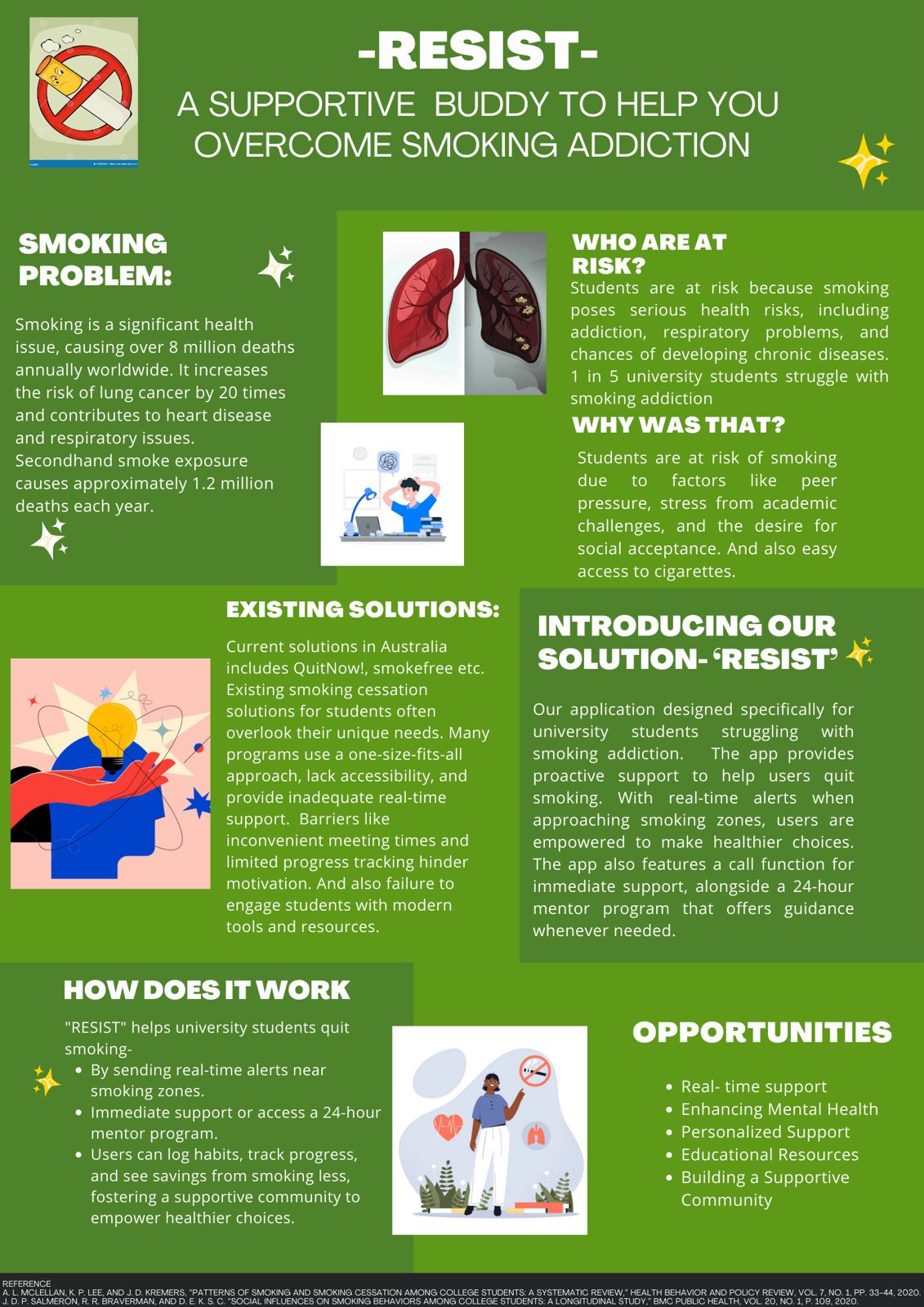
We presented Resist at the course tradeshow with a poster, a brochure and a promotional video,
explaining the problem, how the app works and what's next.
Tradeshow poster
What I'd improve next
True background geofencing: a native or PWA build with push notifications, so alerts work when the app is closed (the web prototype only checks while it's open).
Saved progress: persist locations, streaks and contacts to an account instead of keeping them in memory.
Privacy by design: keep location checks on the device, and make it explicit that no location history is stored.
Key Learnings
The most valuable lesson was letting users kill our favourite ideas. The social feed
and the courses both looked good on a whiteboard, but interviews showed that for something as personal
as addiction, people want private, in-the-moment help, not an audience or homework. Each round of
research removed something and made the product sharper.
It also showed me that context is the feature. The same message lands very
differently depending on where and when it arrives. Designing around location turned generic
encouragement into support that shows up at exactly the moment it's needed.